For iPhone, iPad and Android

LUDÉUM

Twenty-three games with centuries, even millennia, of history: from Egyptian Senet and the Royal Game of Ur to Viking Hnefatafl, Mexica Patolli, Chinese Xiangqi and Japanese Shogi. Challenge characters from their time, play with someone beside you or online.

Coming soon to the App Store

Everything is free to play · No ads · No accounts
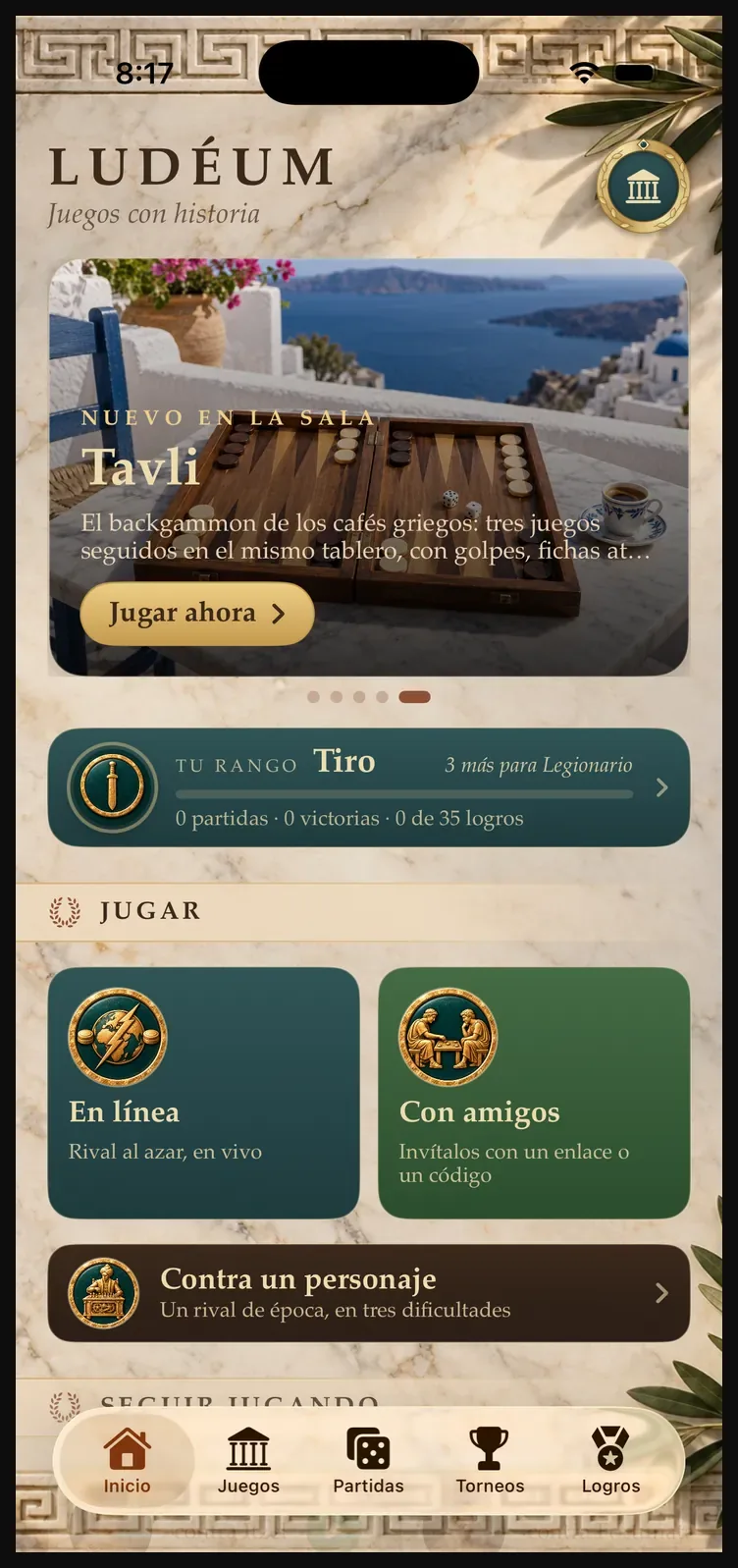
Ludéum home screen: "New in the room: Tavli," your rank and buttons to play online, with friends, or against a historical figure
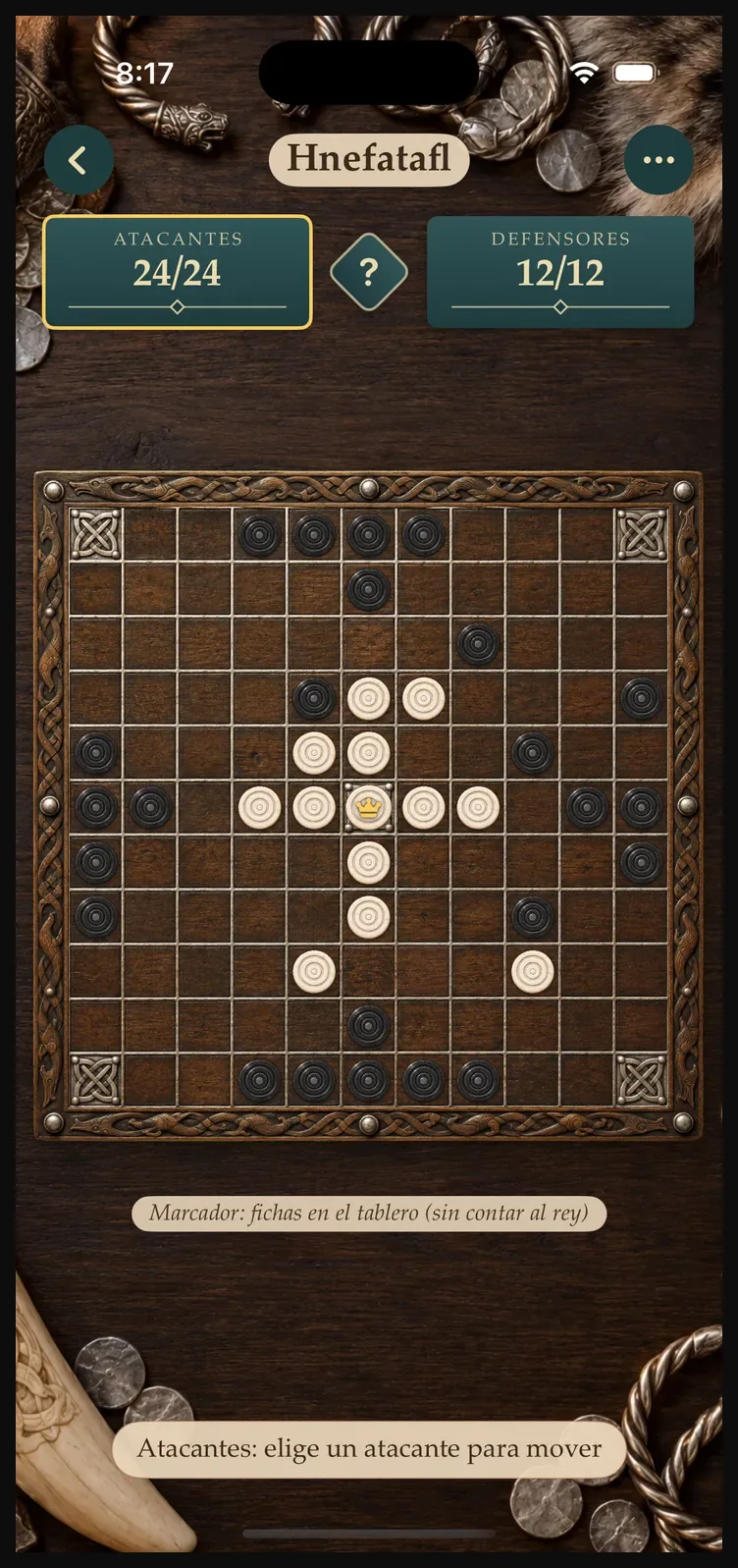
Hnefatafl
23
playable games
69
rivals of their time
4
museum rooms
7
languages

Boards in the collection

Also in landscape

Play your way

One player

Against characters of the era, from Easy to Hard.

Two players

On the same phone or tablet, face to face.

Online

With Game Center on iPhone and iPad, or Google Play Games on Android: a random opponent or invite your friends with a link or a code. Live or turn-based, at your own pace.

Setting up a Patolli match: variant, opponent and difficulty, with the portraits of Tochtli, Itzel and Moctezuma
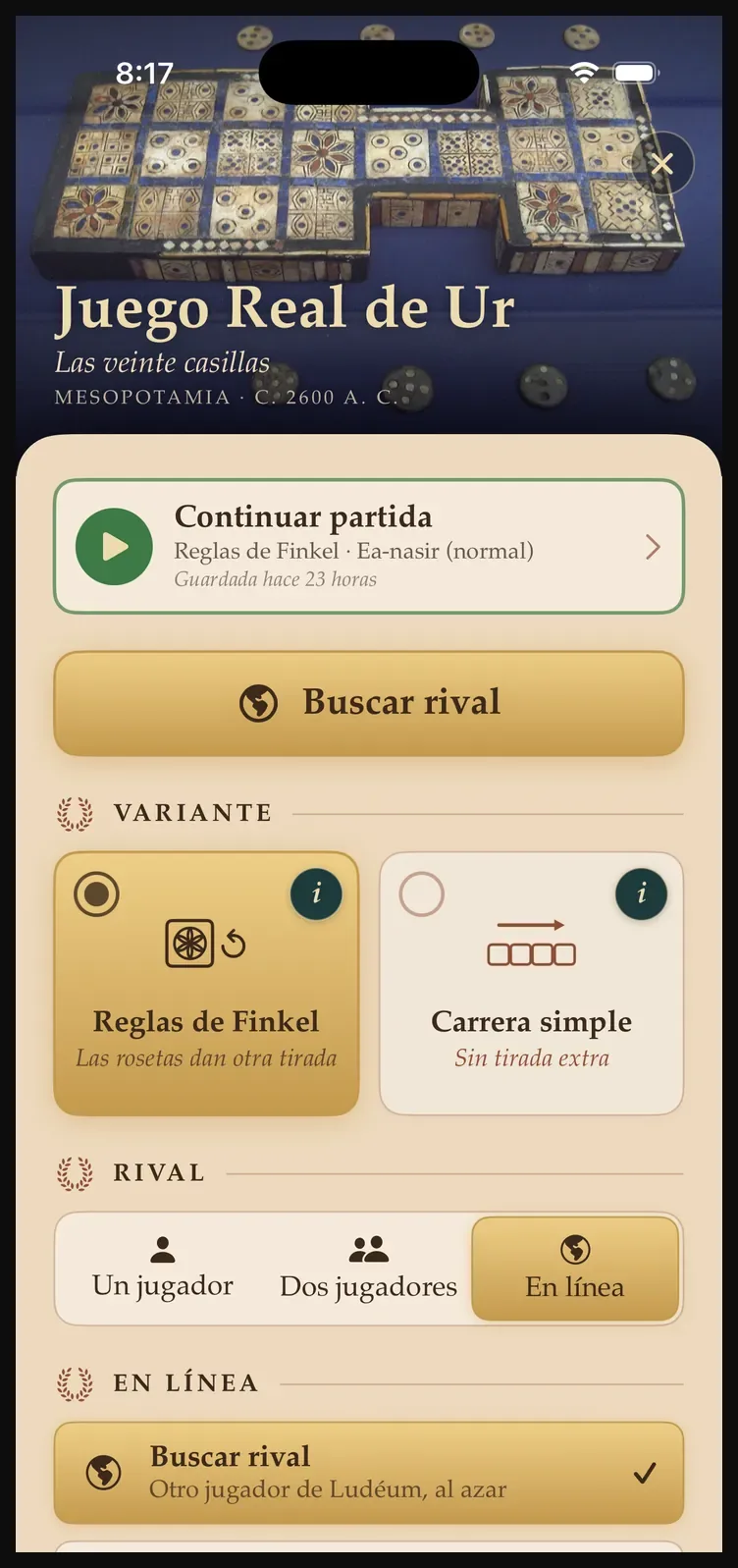
Royal Game of Ur board with the "Find opponent" button and the Online option

The museum rooms

The games are grouped by era and place, as in a museum. They are reconstructed from ancient sources, archaeological findings and oral tradition, and when the sources disagree you choose the variant: Ur with Irving Finkel's rules, Senet according to Kendall or Bell, 9 × 9 Tablut or 11 × 11 Hnefatafl, Arabic or medieval Shatranj, Oware or Kalah, and more.

Antiquity c. 3100 BC – 6th century AD

Mesopotamia · c. 2600 BC

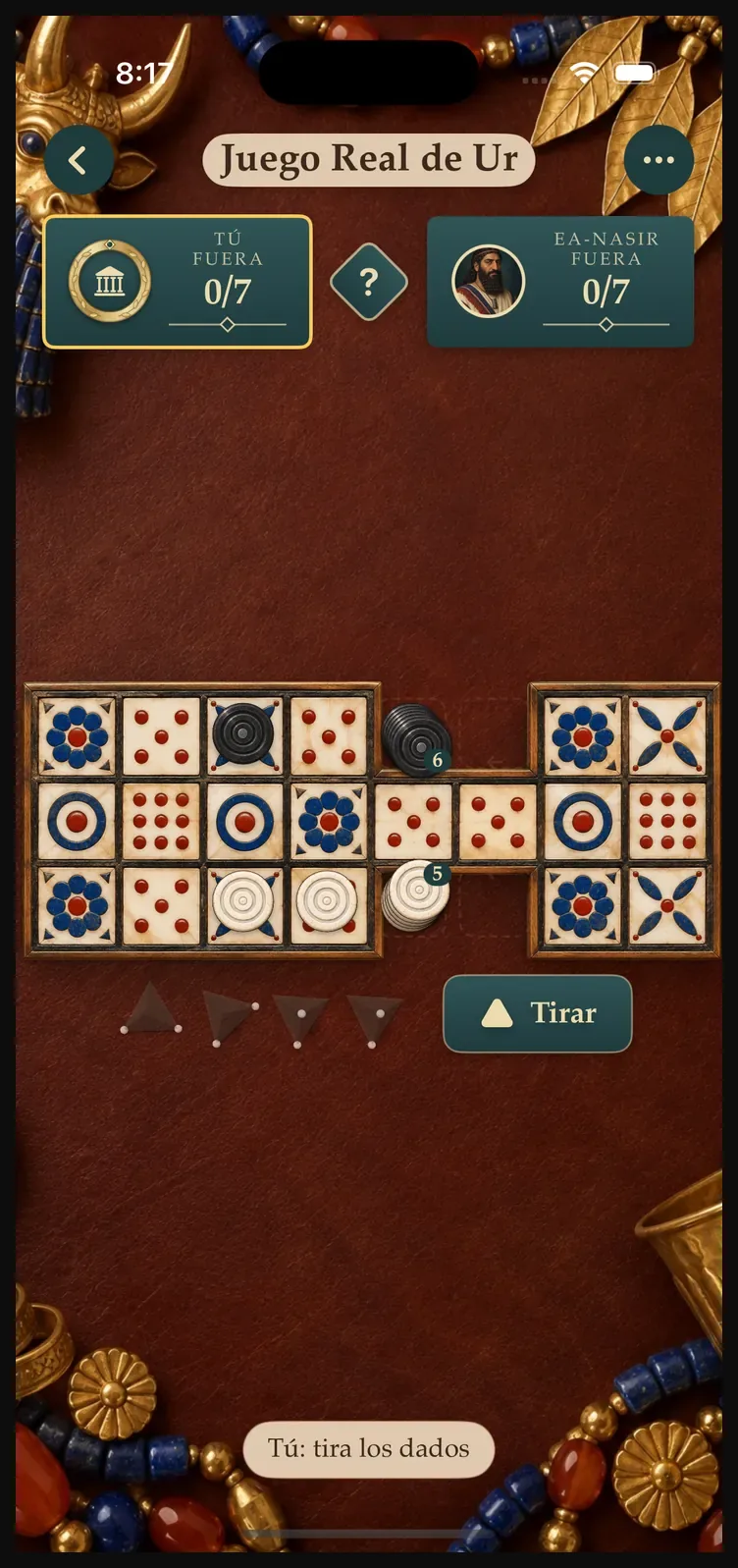
Royal Game of Ur

Royal Game of Ur

The Game of Twenty Squares

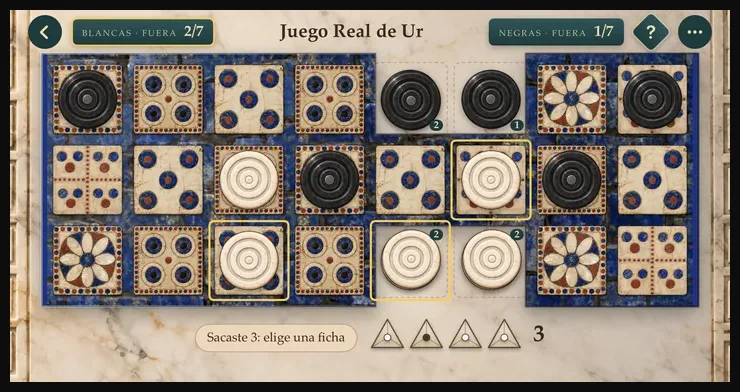
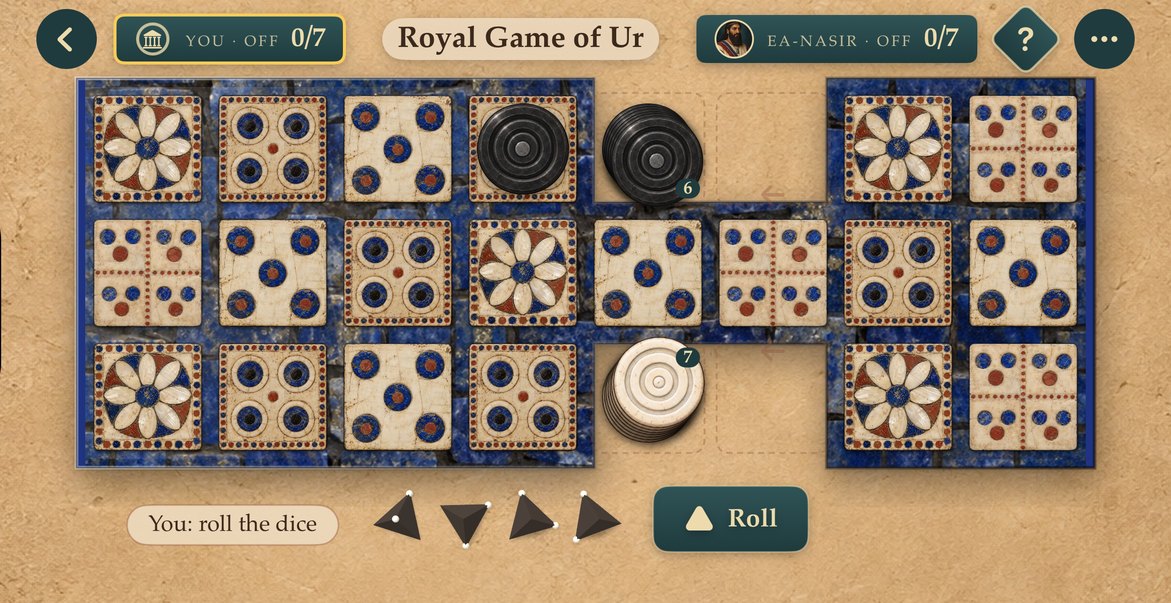
A race with pyramid dice across 20 squares: rosettes grant another roll, and captures happen on the middle row.

Opponents: Ludingira, the scribe's apprentice · Ea-nasir, the merchant · Puabi, the queen of Ur

Their rivals
Ludingira, the scribe's apprentice · Ea-nasir, the merchant · Puabi, the queen of Ur

2 variants
Greece · 7th century BC

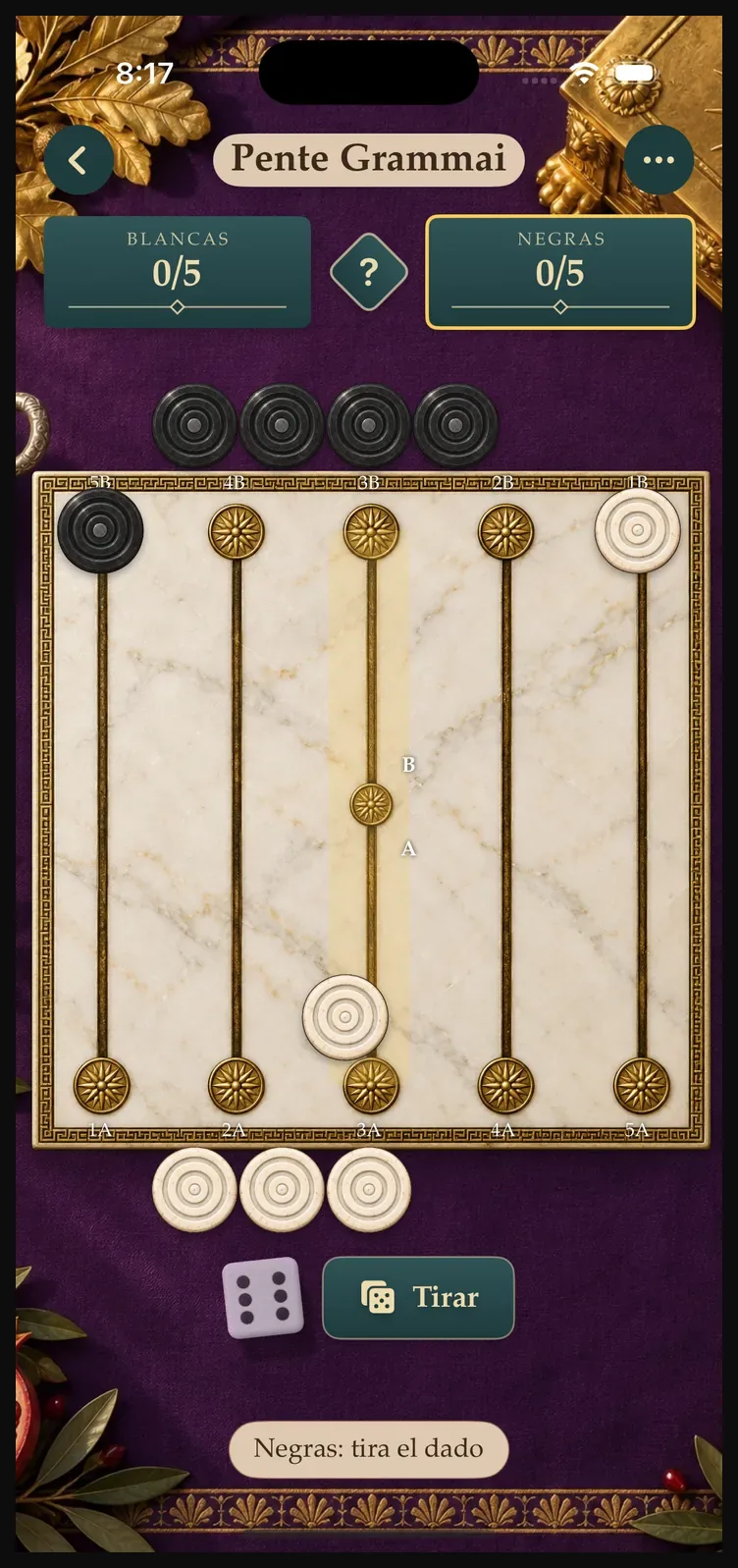
Pente Grammai

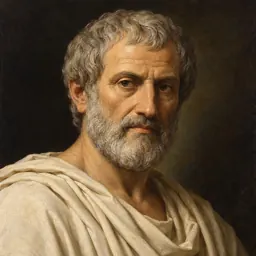
Pente Grammai

The Five Lines

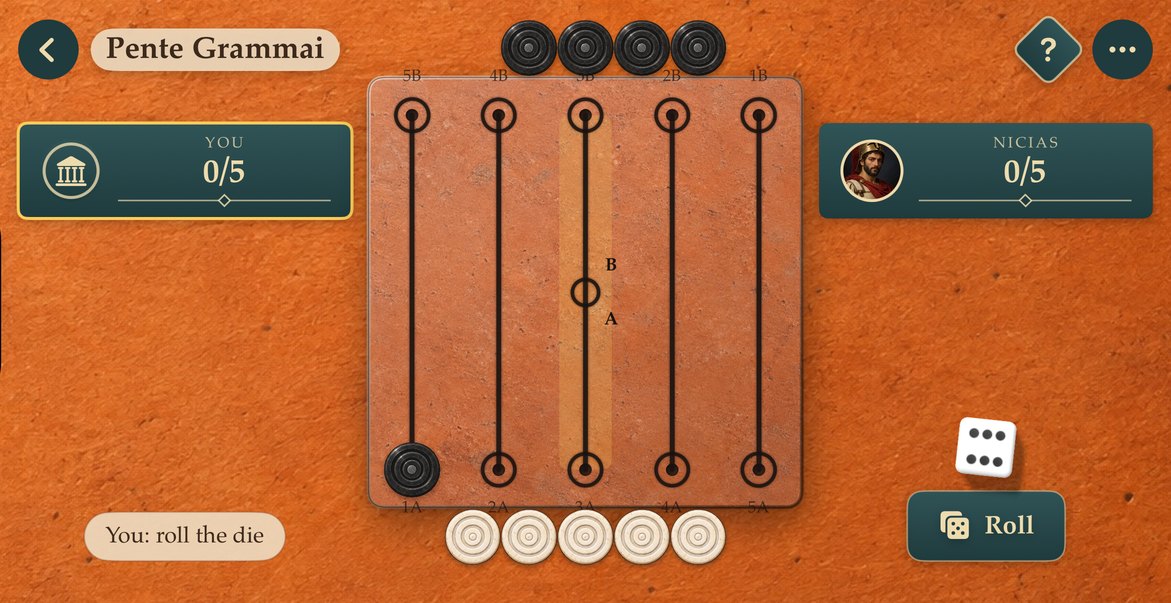
The oldest Greek board game we know of: move your pieces to the sacred line.

Rivals: Daphnis, the shepherd · Nicias, the hoplite · Aristotle, the philosopher

Their rivals
Daphnis, the shepherd · Nicias, the hoplite · Aristotle, the philosopher

2 variants

Rome · 1st century BC

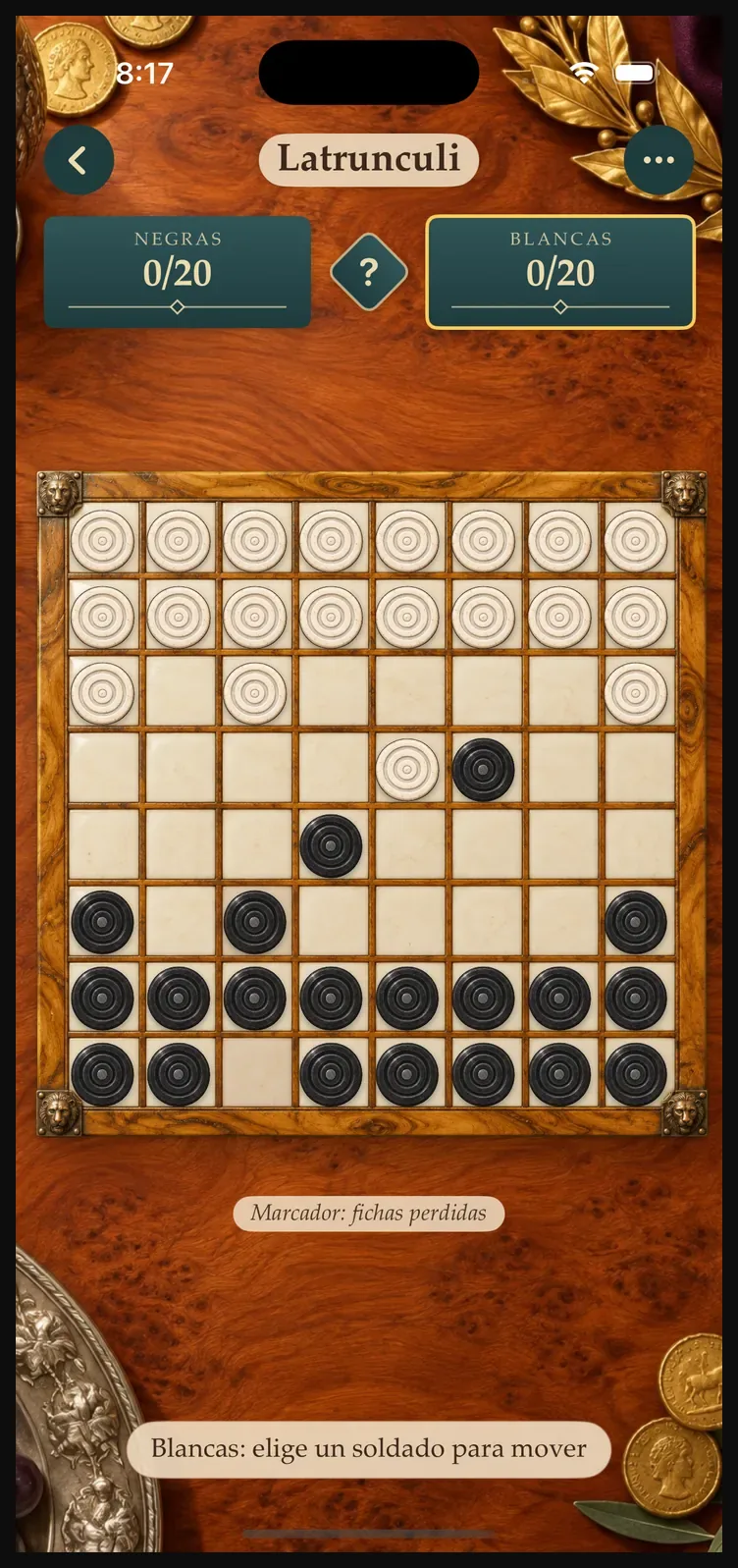
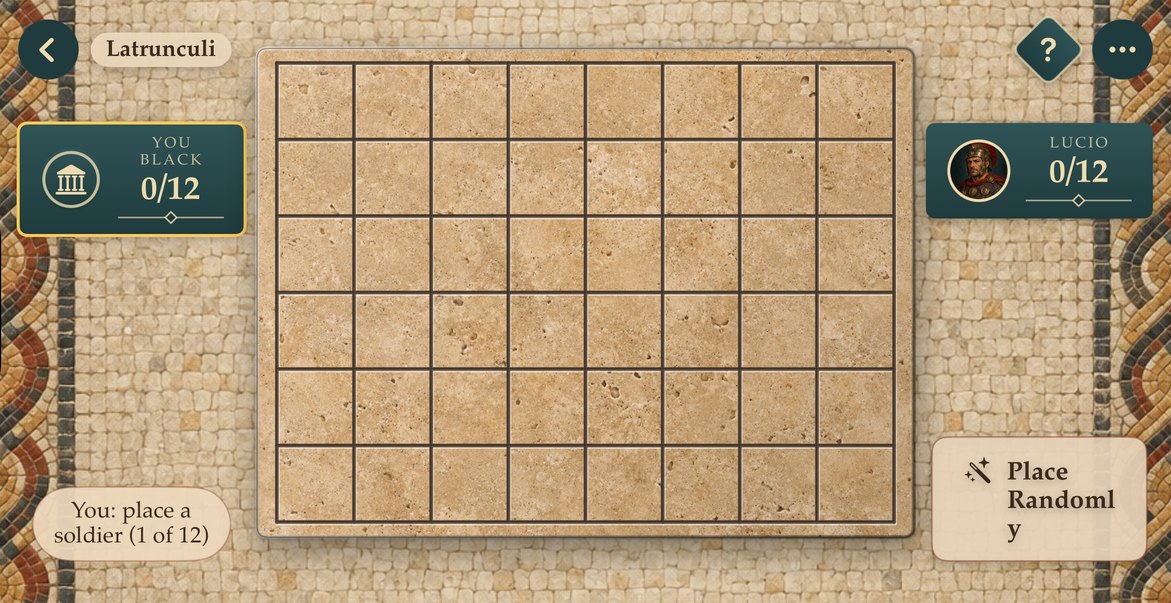
Latrunculi

Latrunculi

The game of soldiers
Place your soldiers, then trap enemy pieces between two of your own to capture them.

Rivals: Decimus, the recruit · Lucius, the centurion · Maximus, the legate

Their rivals
Decimus, the recruit · Lucius, the centurion · Maximus, the legate

4 variants

Rome · 1st century BC – 6th century AD

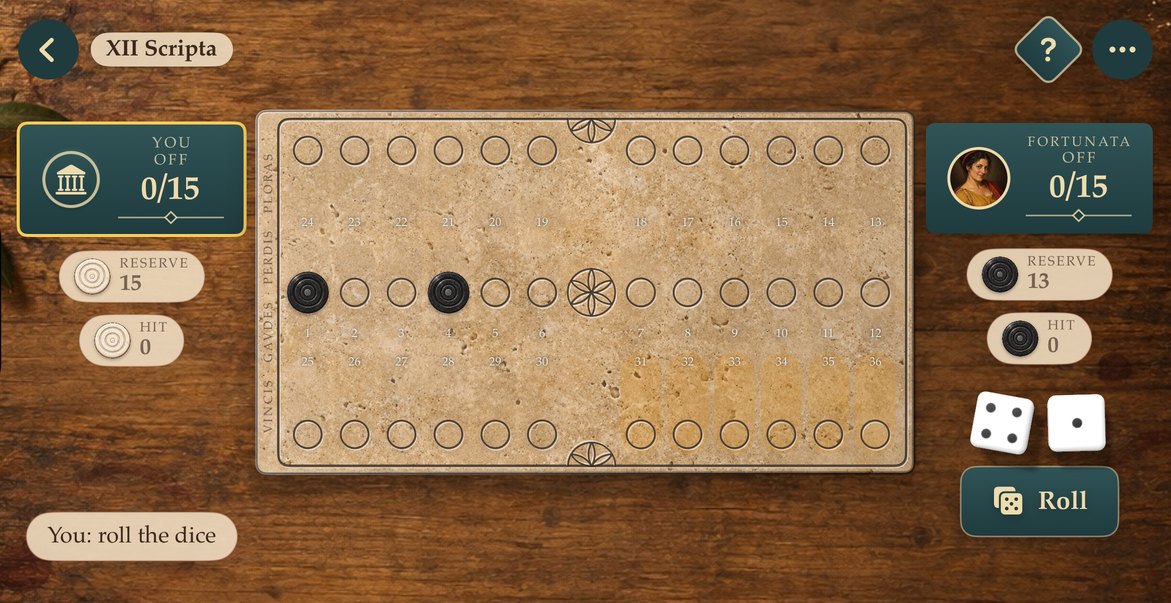
XII Scripta

XII Scripta

Twelve Lines · Alea

A race with 15 pieces and dice, ancestor of backgammon: get them all off the board before your rival.

Rivals: Felix, the freedman · Fortunata, the tavern keeper · Claudius, the emperor

Their rivals
Felix, the freedman · Fortunata, the shopkeeper · Claudius, the emperor

2 variants

Rome · imperial era

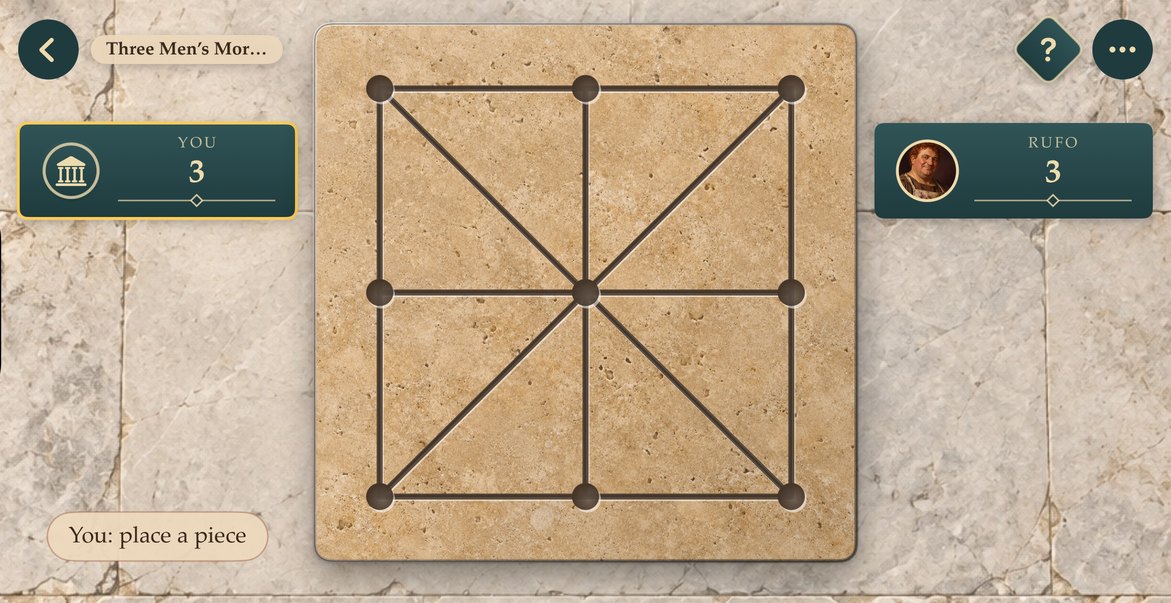
Three Men's Morris

Three Men's Morris

Roman tic-tac-toe

Place and move three pieces until you form a line. Quick and deceptively deep.

Rivals: Quintus, the forum child · Rufus, the tavern keeper · Cornelius, the senator

Their rivals
Quintus, the boy from the forum · Rufus, the baker · Cornelius, the senator

2 variants

Egypt · c. 3100 BC

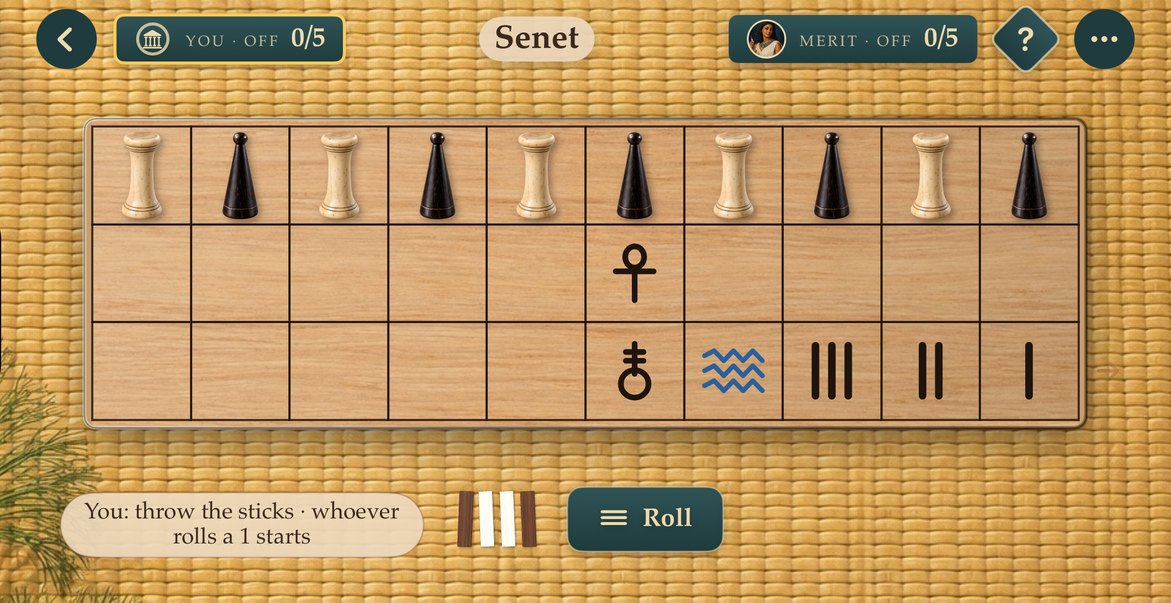
Senet

Senet

The game of passage

Egypt's race across 30 houses with four tablets: swap places with your rival's piece, protect your own two by two, and don't fall into the water.

Rivals: Ipy, the scribe's apprentice · Merit, the linen weaver · Tutankhamun, the pharaoh

Their rivals
Ipy, the scribe's apprentice · Merit, the linen weaver · Tutankhamun, the pharaoh

3 variants

Middle Ages 4th – 15th century

Scandinavia · 4th – 11th century

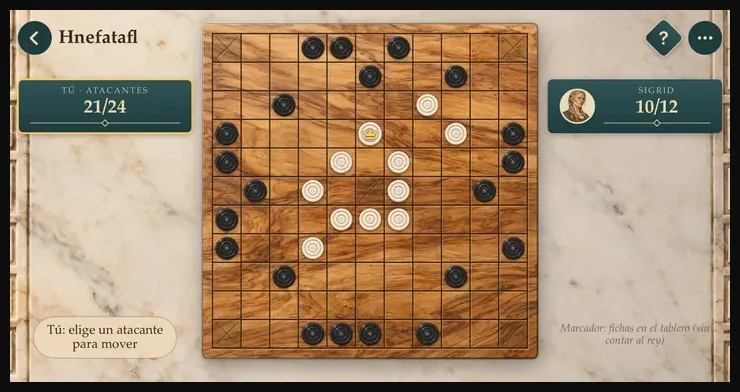
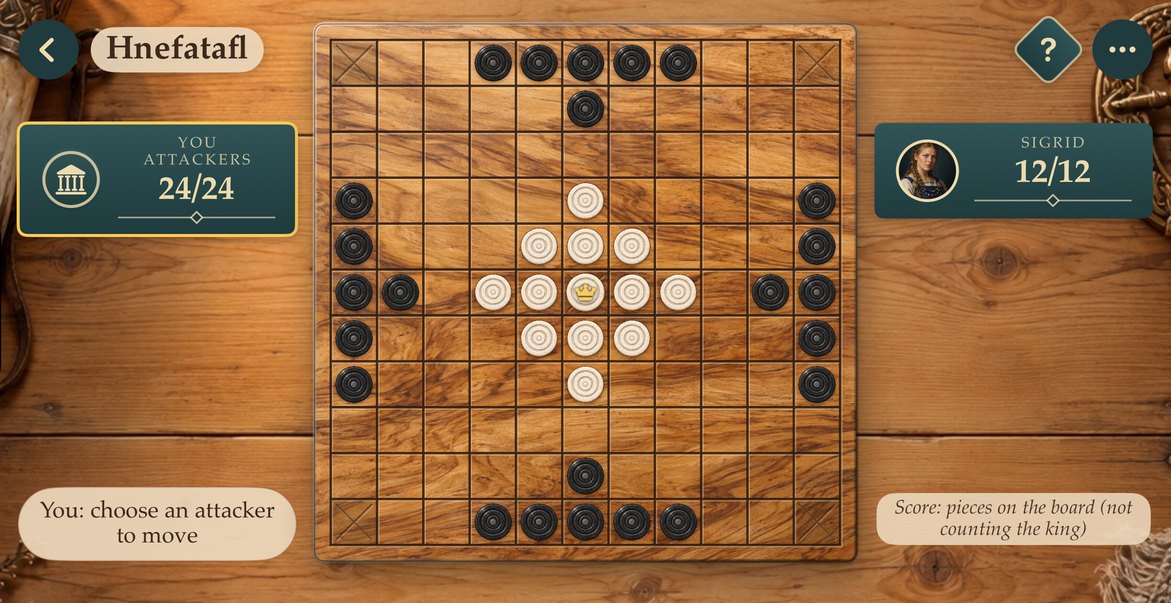
Hnefatafl

Hnefatafl

The king's board

Asymmetrical Viking game: the defenders escort the king to a corner; the attackers try to surround him.

Rivals: Leif, the fisherman · Sigrid, the skald · Harald, the jarl

Their rivals
Leif, the fisherman · Sigrid, the skald · Harald, the jarl

2 variants

Rome · Middle Ages

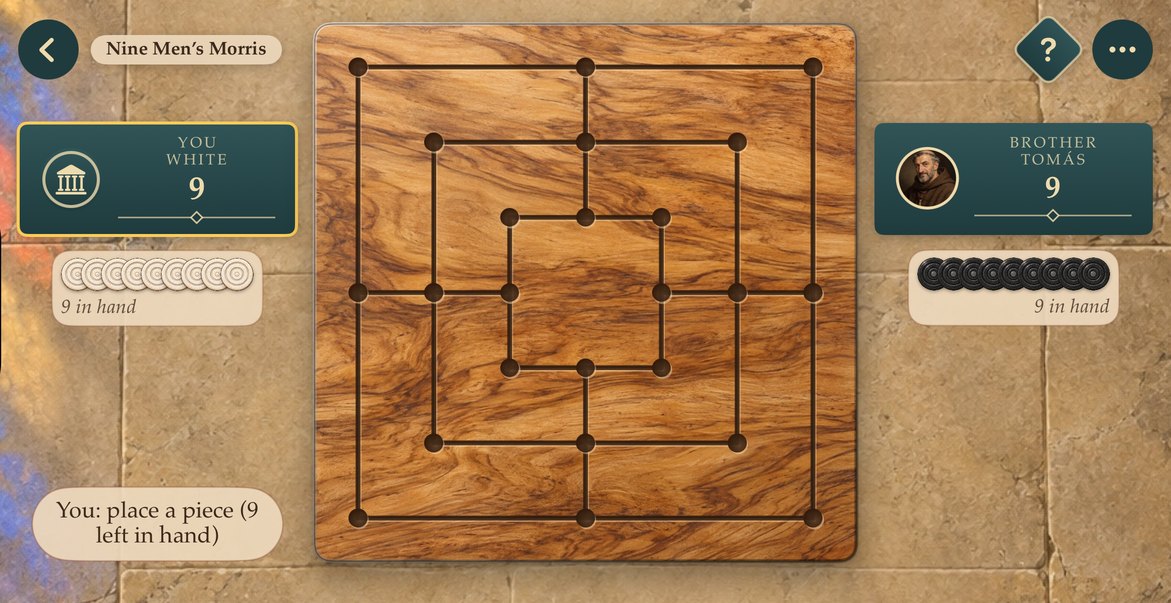
Nine Men's Morris

Nine Men's Morris

The mill · alquerque of nine

Place and move nine pieces: every three in a row forms a mill and lets you remove a rival's piece.

Rivals: Rodrigo, the squire · Friar Tomás · Alfonso X, the Wise

Their rivals
Rodrigo, the squire · Friar Tomás · Alfonso X, the Wise

2 variants

Persia and Baghdad · 7th – 13th c.

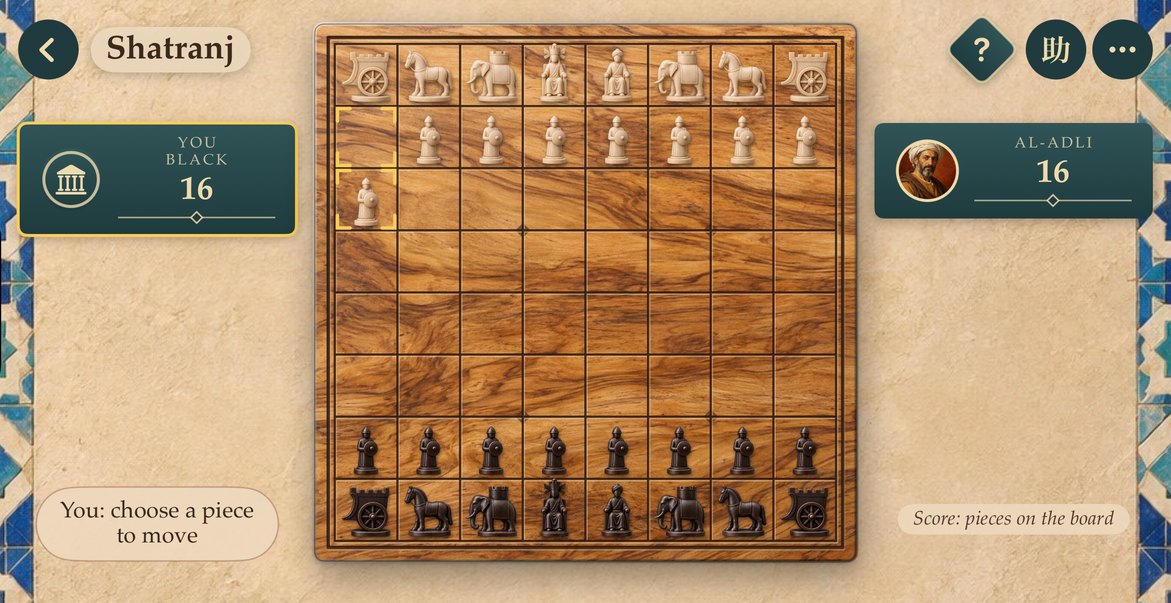
Shatranj

Shatranj

Chess of Persia and Islam

The chess of the caliphs of Baghdad: the ferz moves one step diagonally, the elephant leaps two squares, and the pawn is crowned as a ferz. In Alfonso X's variant, it's even played with dice.

Rivals: Zaynab, the merchant's daughter · al-Adli, the master · as-Suli, the caliph's champion

Their rivals
Zaynab, the merchant's daughter · al-Adli, the master · as-Suli, the caliph's champion

2 variants

China · Tang dynasty – today

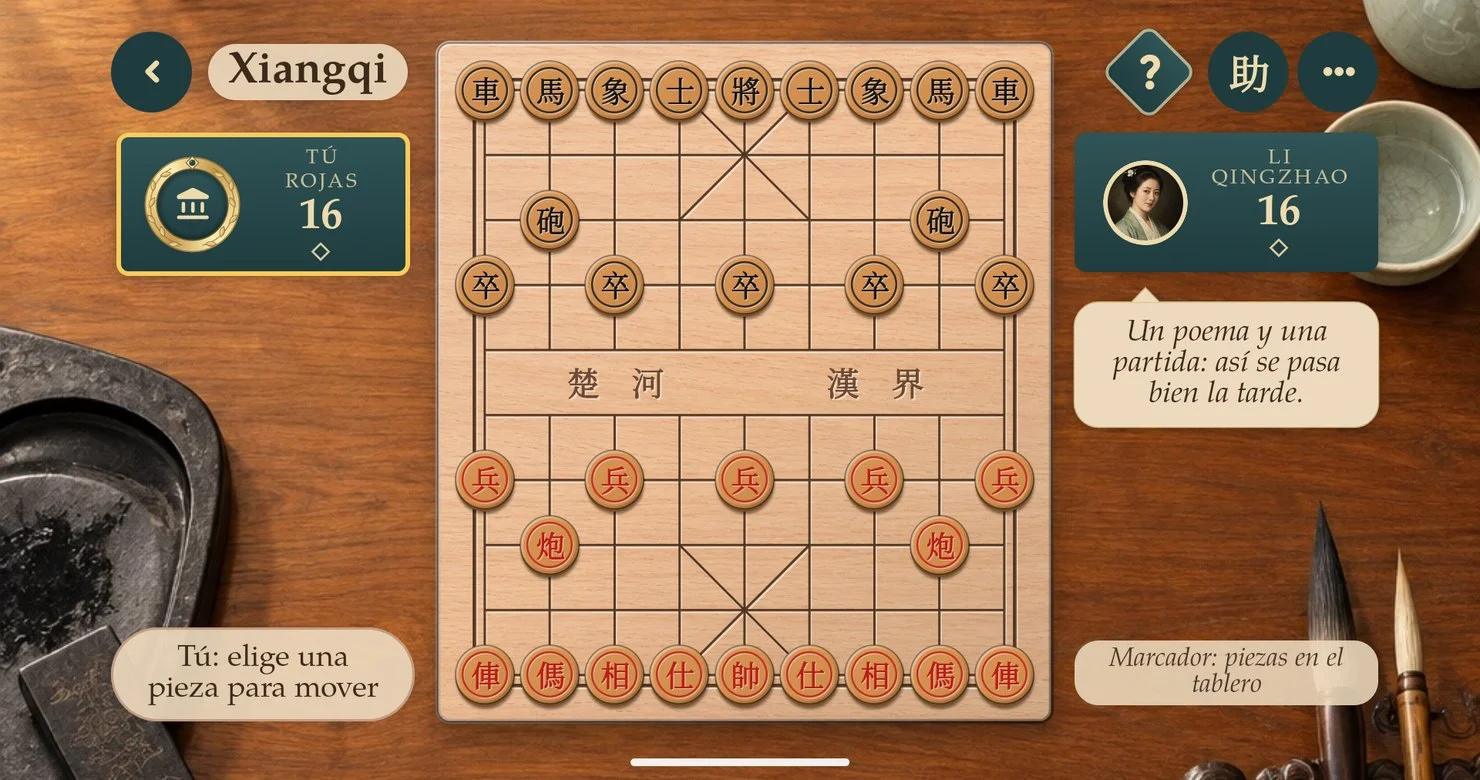
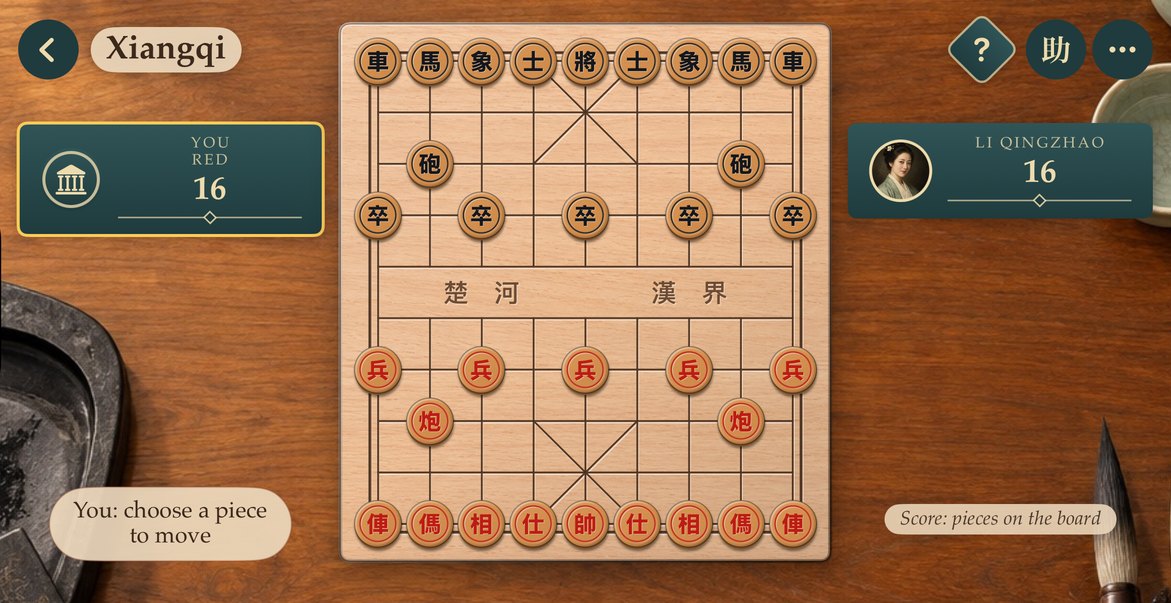
Xiangqi

Xiangqi

Chinese chess

Cannons that capture by jumping, elephants that never cross the river, and a general who never leaves his palace. Checkmate the rival general.

Rivals: Xiaobao, the calligrapher's apprentice · Li Qingzhao, the poet · Niu Sengru, the chancellor

Their rivals
Xiaobao, the calligrapher's apprentice · Li Qingzhao, the poet · Niu Sengru, the chancellor

Modern Asian rules

Japan · Heian era – today

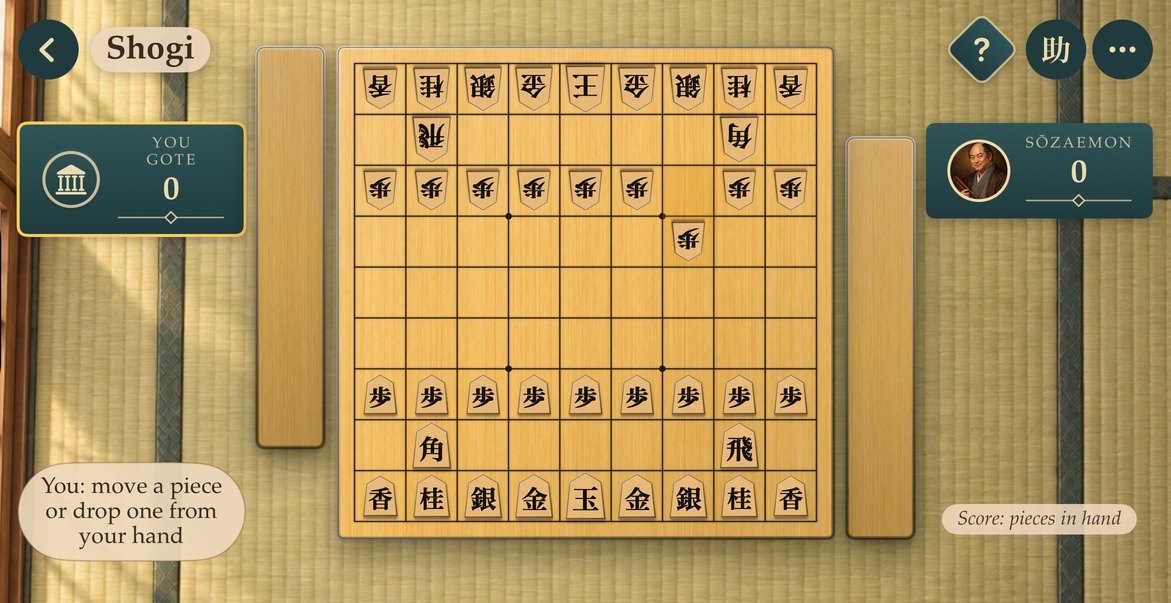
Shogi

Shogi

Japanese chess

The pieces you capture pass into your hand, and you can drop them back onto the board as your own. Pieces promote upon entering enemy territory, and the goal is to checkmate the king.

Rivals: Haru, the potter's daughter · Sōzaemon, the rice merchant · Master Kansuke

Their rivals
Haru, the potter's daughter · Sōzaemon, the rice merchant · Master Kansuke

Rules of the Japan Shogi Association

Peoples of the world Traditions from around the world

Africa · traditional

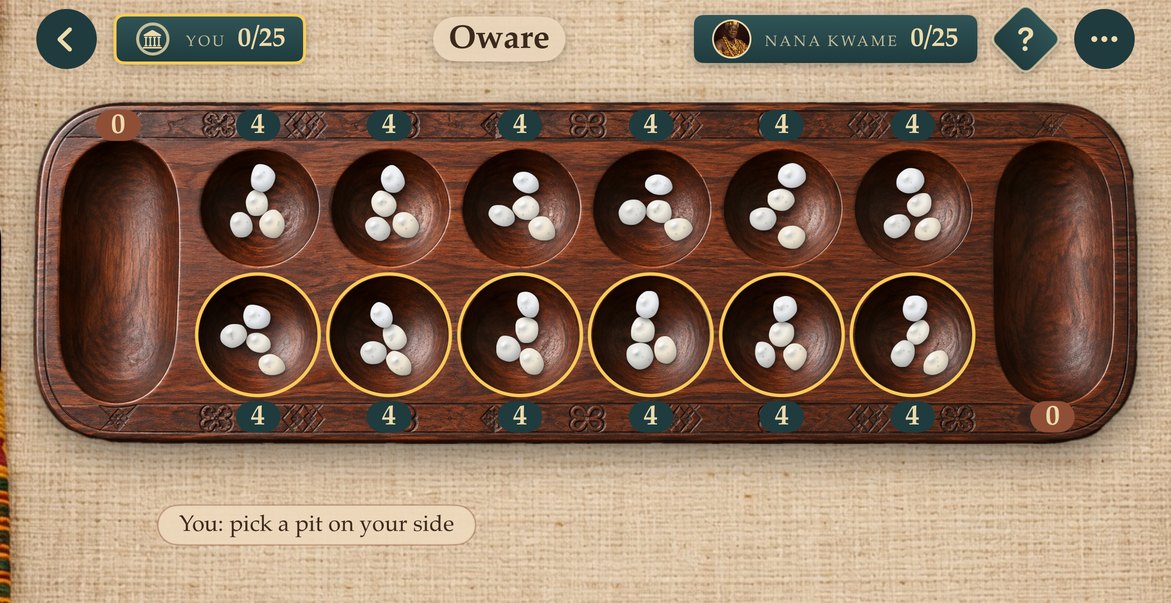
Oware / Mancala

Oware / Mancala

The sowing game

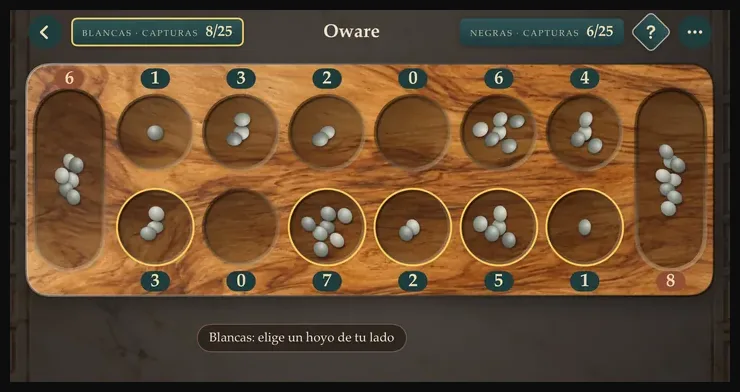
Sow seeds from pit to pit and capture your rival's when you leave 2 or 3. Whoever gathers 25 of the 48 wins.

Rivals: Kofi, the boy · Nana Kwame, the chief · Yaa Asantewaa, the queen mother

Their rivals
Kofi, the boy · Nana Kwame, the chief · Yaa Asantewaa, the queen mother

2 variants

Mesoamerica · until 1521

Patolli

Patolli

The game of beans

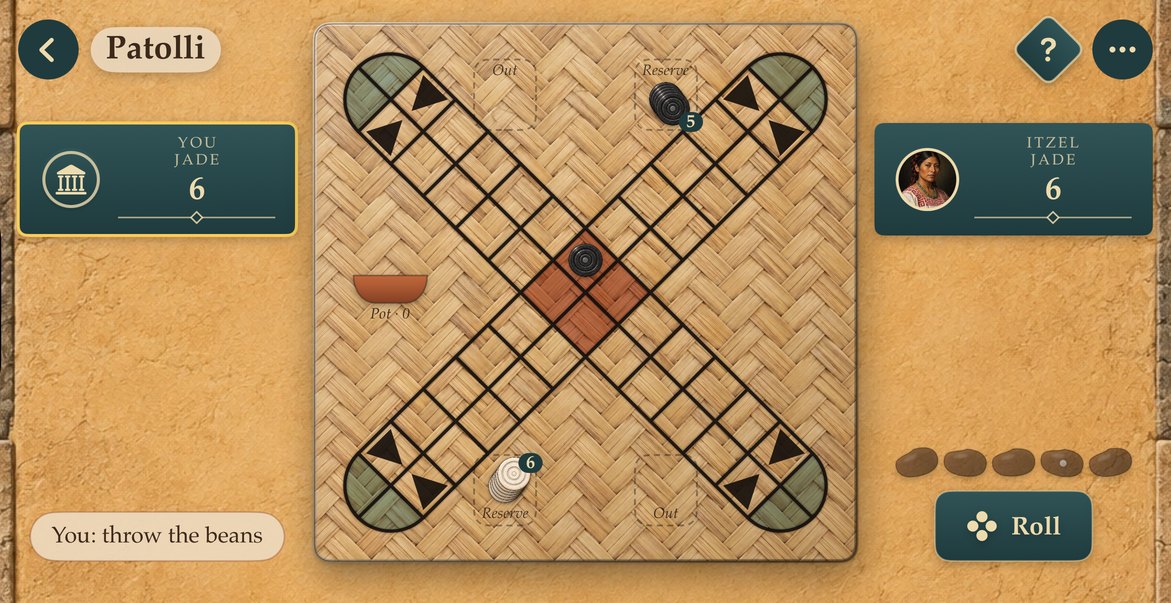
Aztec cross-shaped race with five beans as dice: wager jade beads, avoid the triangles, and capture in the center.

Rivals: Tochtli, the macehual · Itzel, the pochteca · Moctezuma, the huey tlatoani

Their rivals
Tochtli, the macehual · Itzel, the market seller · Moctezuma, the huey tlatoani

2 variants

Hawaii · before 1778

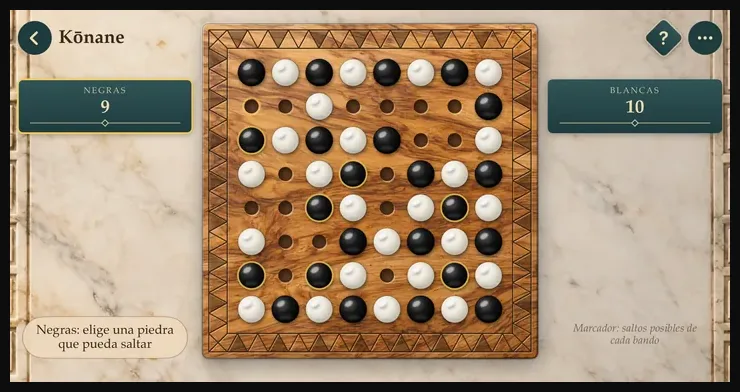
Kōnane

Kōnane

Lava and coral

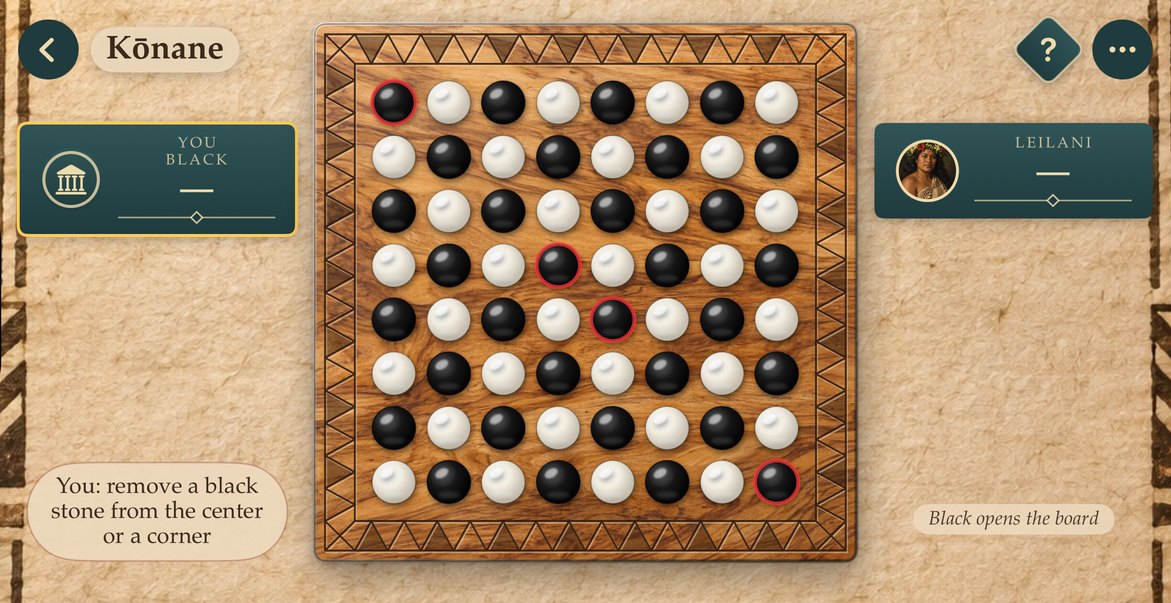
Hawaiian jumping game: the board starts full and every move captures. Whoever can no longer jump loses.

Rivals: Kai, the fisherman · Leilani, the weaver · Kaʻahumanu, the regent

Their rivals
Kai, the fisherman · Leilani, the weaver · Kaʻahumanu, the regent

2 variants

Greece · Byzantium – today

Tavli

Tavli

Greek backgammon

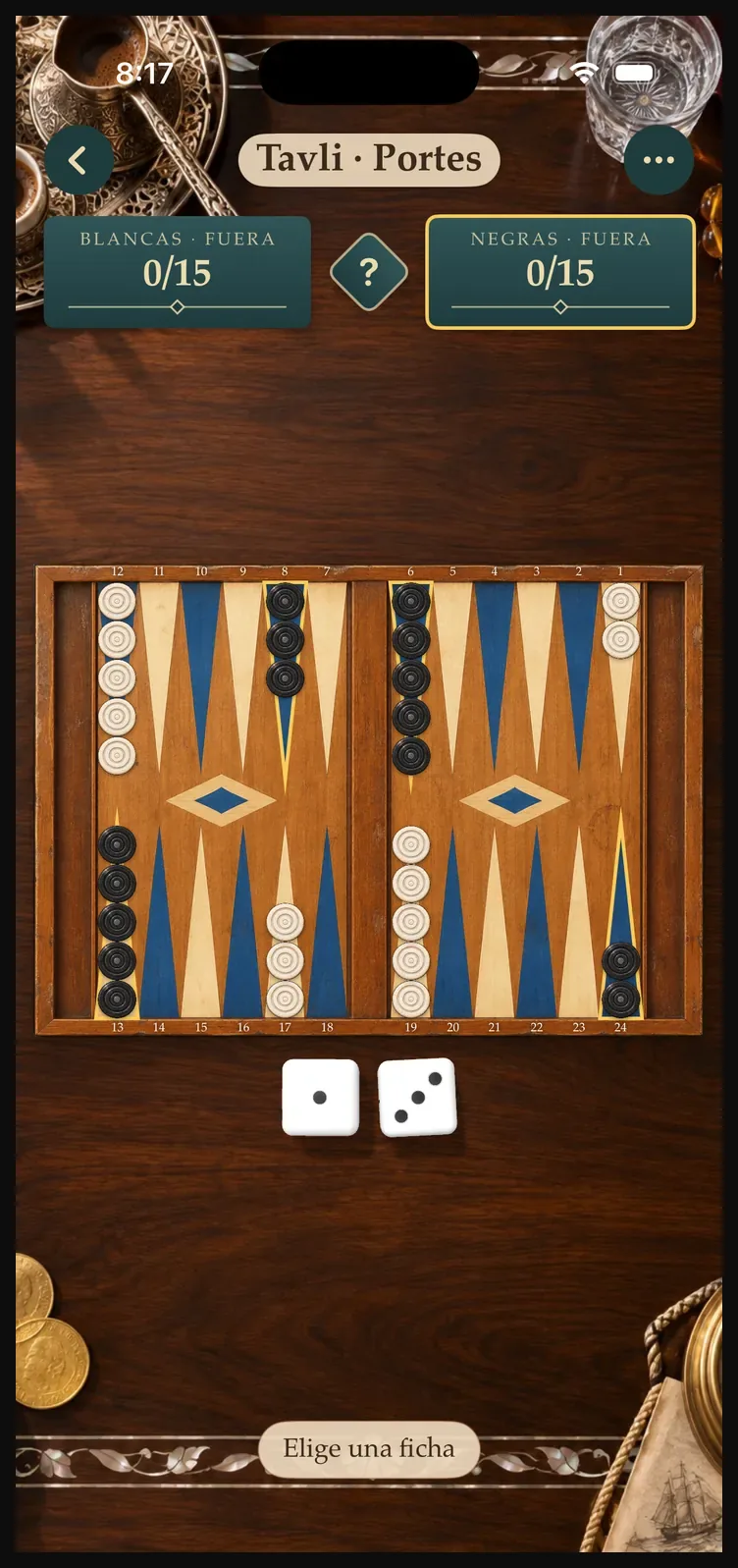
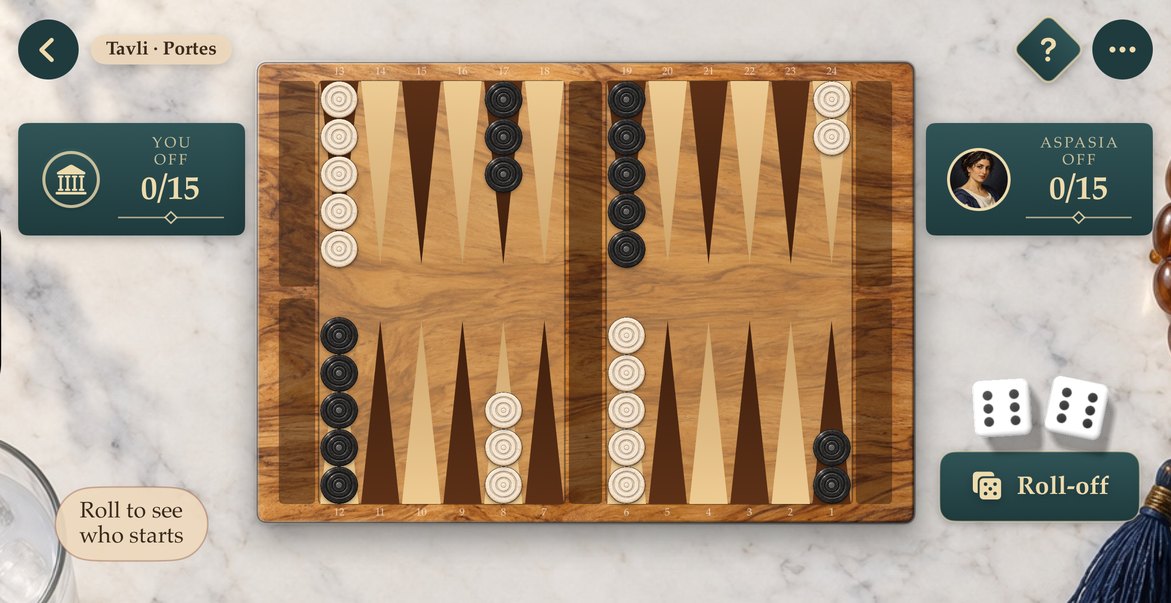
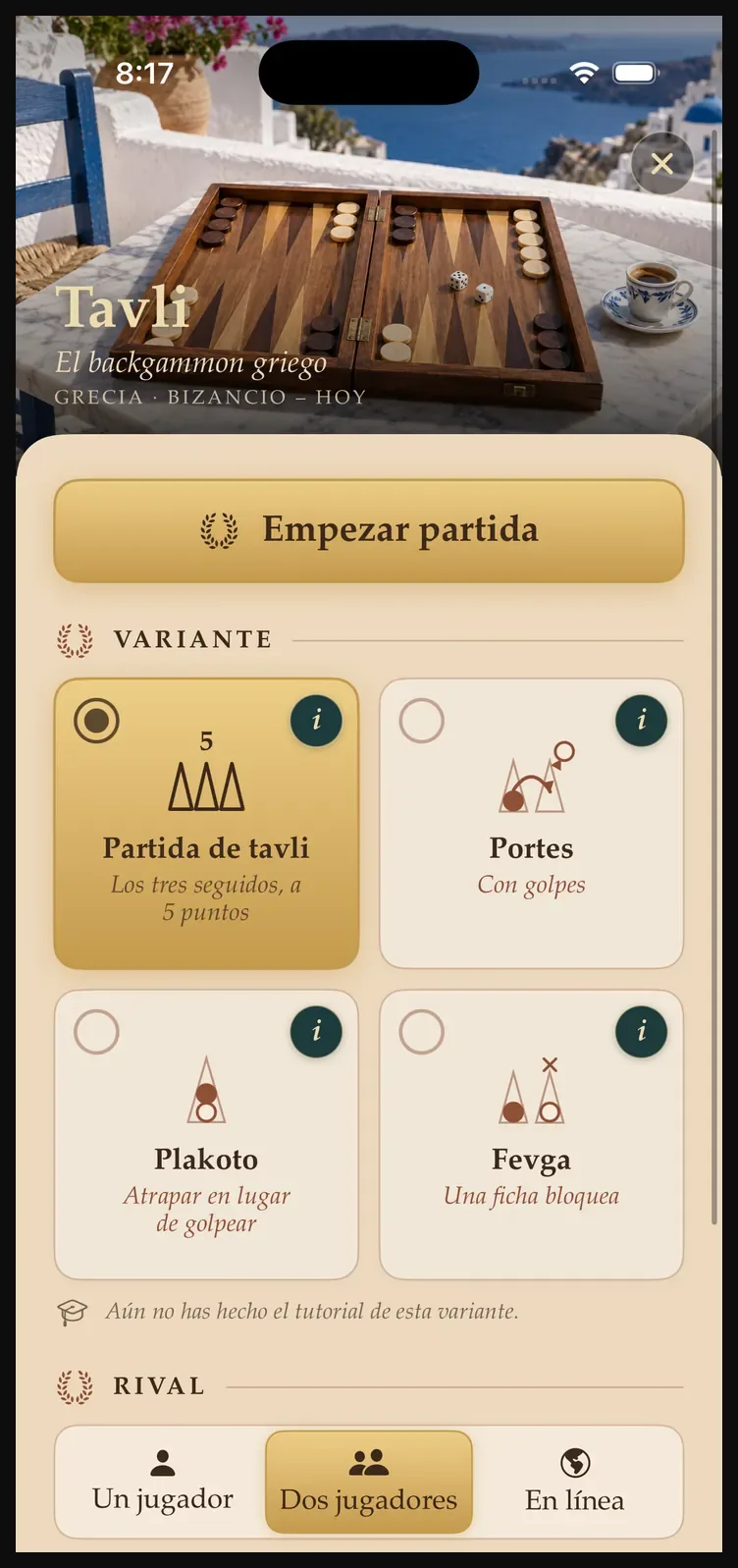
The backgammon of Greek cafés: three games in a row on the same board, with hits, trapped pieces and blocks, up to 5 points.

Rivals: Archimedes, the mathematician · Aspasia of Miletus · Achilles, the hero

Their rivals
Archimedes, the mathematician · Aspasia of Miletus · Achilles, the hero

4 variants

Southern Africa · traditional

Morabaraba

Morabaraba

The mill of the cows

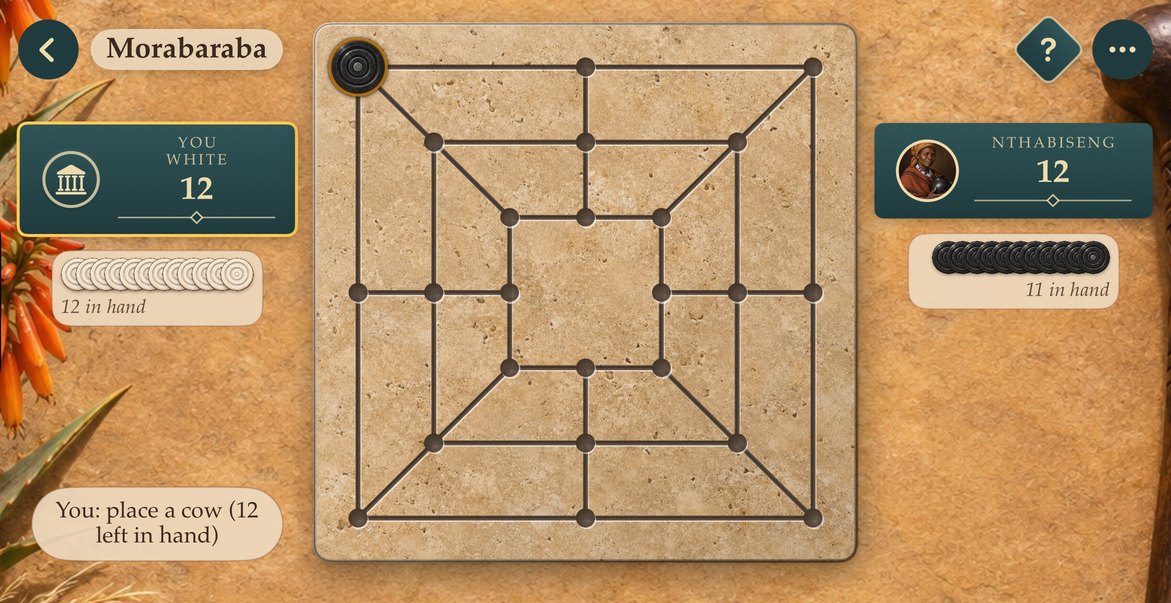
The shepherds' mill game of southern Africa: twelve cows per side and diagonals at the corners. Every three in a row lets you remove a rival's cow.

Rivals: Thabo, the little shepherd · Nthabiseng, the potter · Moshoeshoe, king of the Basotho

Their rivals
Thabo, the little shepherd · Nthabiseng, the potter · Moshoeshoe, king of the Basotho

2 variants

Madagascar · 17th century – today

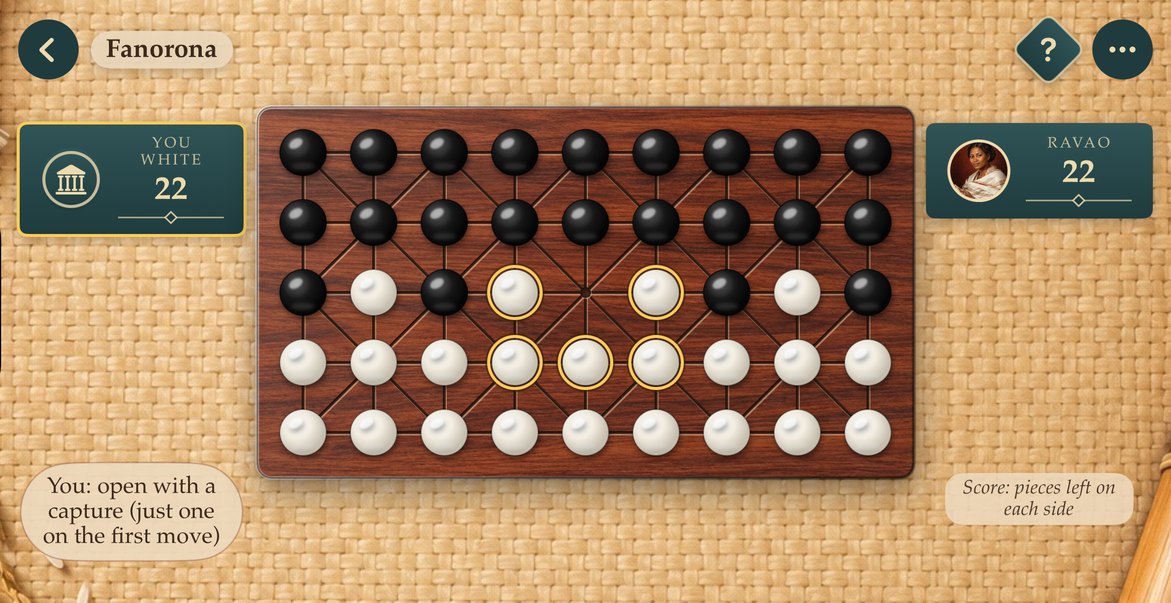
Fanorona

Fanorona

Capture by approach or withdrawal

Move toward a rival piece or away from it and you capture the whole row along that line. Chain captures decide the game.

Rivals: Hery, the zebu boy · Ravao, the silk weaver · Ranavalona III, the queen

Their rivals
Hery, the zebu boy · Ravao, the silk weaver · Ranavalona III, the queen

2 variants

Italy · 18th century – America

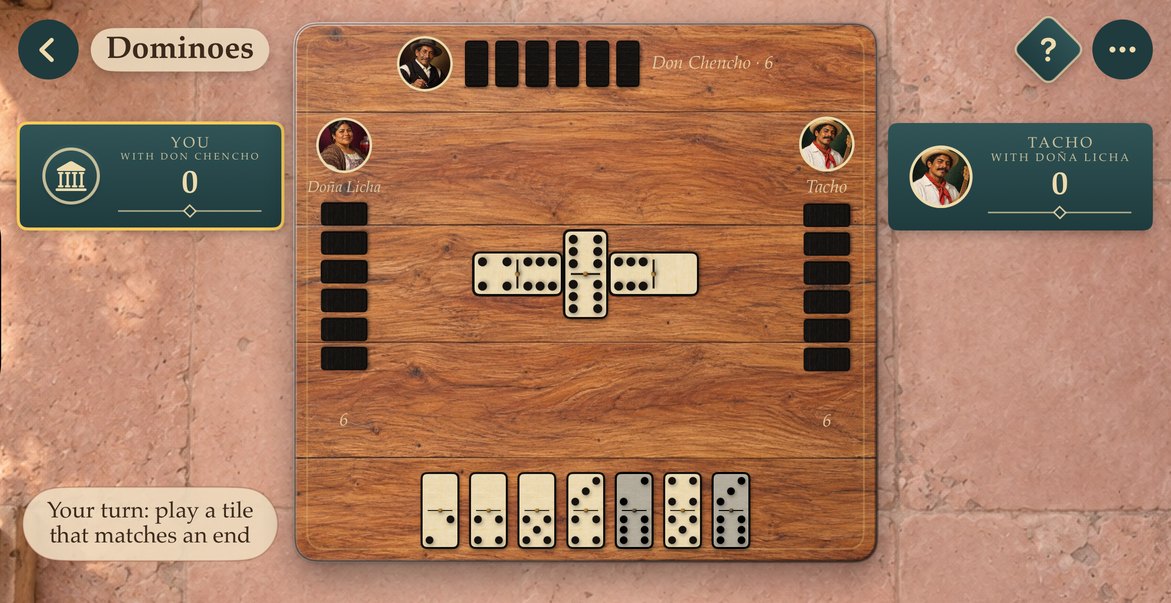
Dominoes

Dominoes

Two dice in one tile

The domino game of the arcades and fairs of Mexico: lay tiles that match the open ends and be the first to run out of tiles. For pairs or two players, with a pot.

Rivals: Beto, the lottery caller · Tacho, the merrymaker · Juventino Rosas, the composer

Their rivals
Beto, the lottery caller · Tacho, the merrymaker · Juventino Rosas, the composer

2 variants

Card room 16th – 19th c.

England · 17th c.

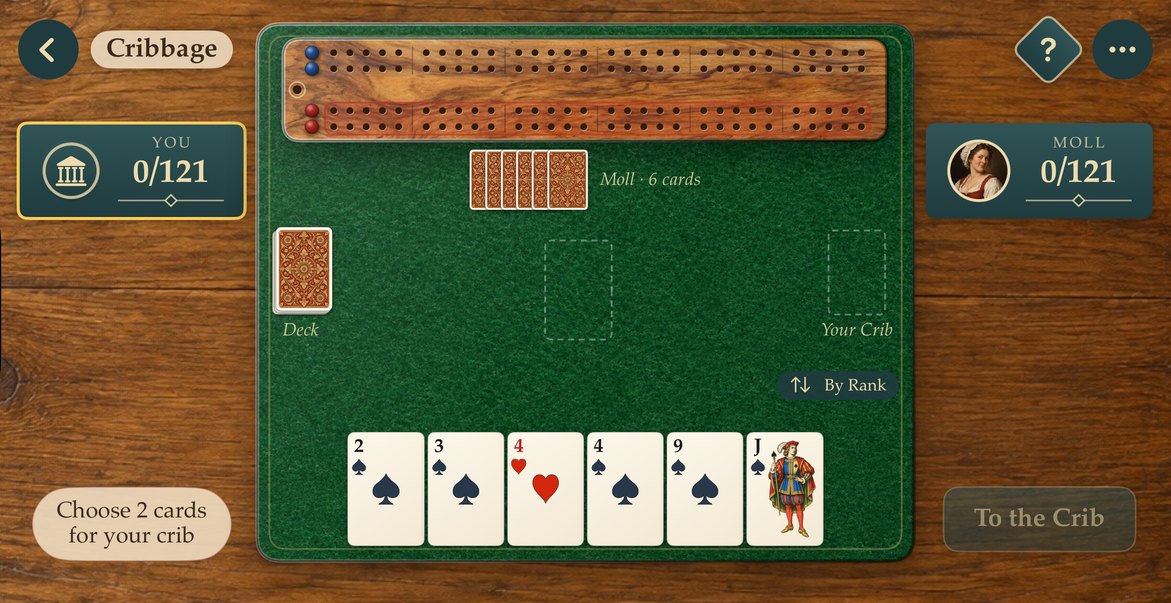
Cribbage

Cribbage

Fifteens, pairs and pegs

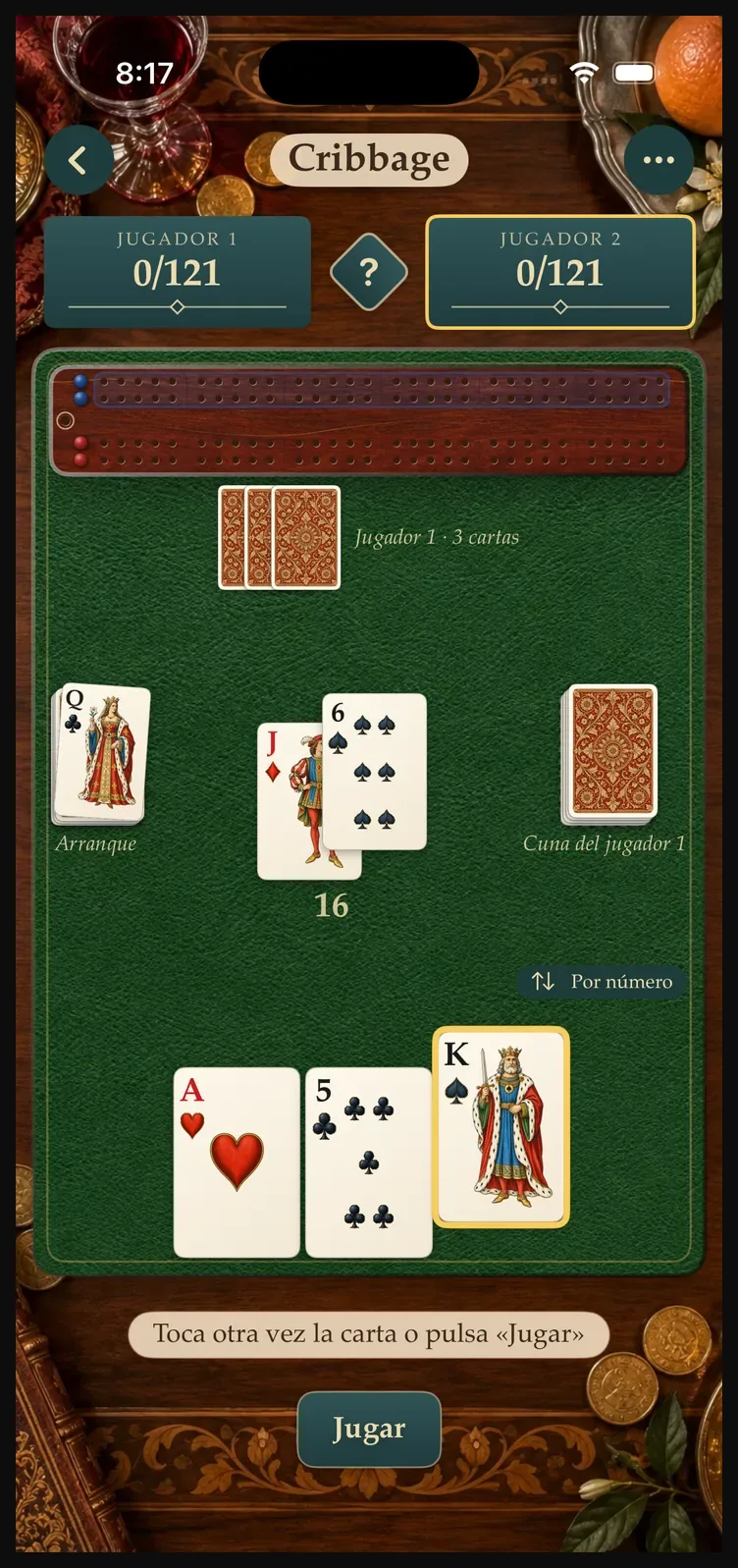
English card game with a peg board: add up fifteens, pairs and runs, and reach the finish before your rival.

Rivals: Ned, the tavern boy · Moll, the innkeeper · Sir John, the poet

Their rivals
Ned, the Thames ferryman · Moll, the innkeeper · Sir John, the poet

2 variants

Mexico · 19th c.

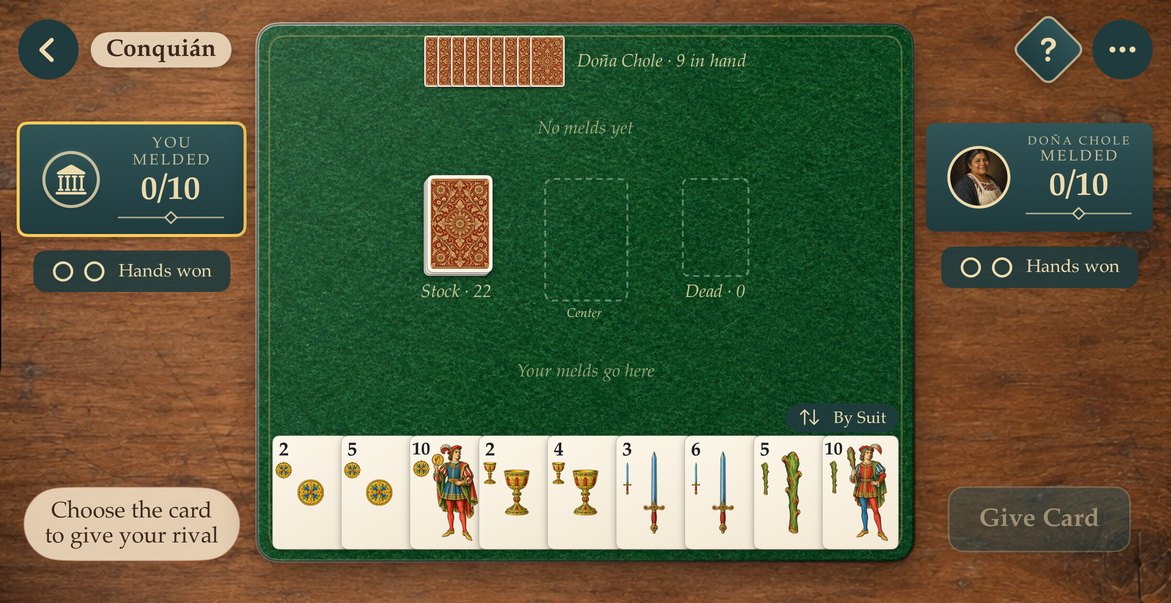
Conquián

Conquián

The grandfather of rummy

The Mexican card game that gave birth to rummy: play the center card in sets and runs until you're out of cards.

Rivals: Toño, the muleteer · Doña Chole, the innkeeper · Don Juan, the rancher

Their rivals
Toño, the muleteer · Doña Chole, the innkeeper · Don Juan, the rancher

2 variants

Italy · 19th c.

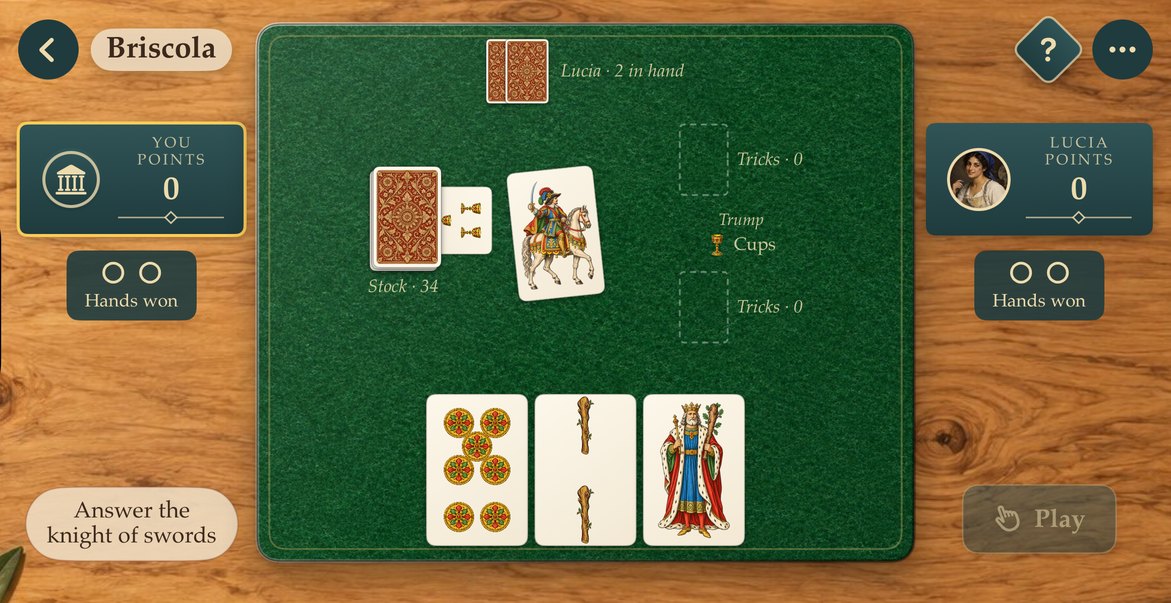
Briscola

Briscola

Trumps and mariannas

Italy's card game: you don't have to follow suit, trump rules all, and whoever collects more than 60 of the 120 points wins.

Rivals: Totò, the fisherman · Lucia, the potter · Nonno Saro, from the plaza

Their rivals
Totò, the fisherman · Lucia, the potter · Nonno Saro, from the plaza

2 variants

Japan · 19th c.

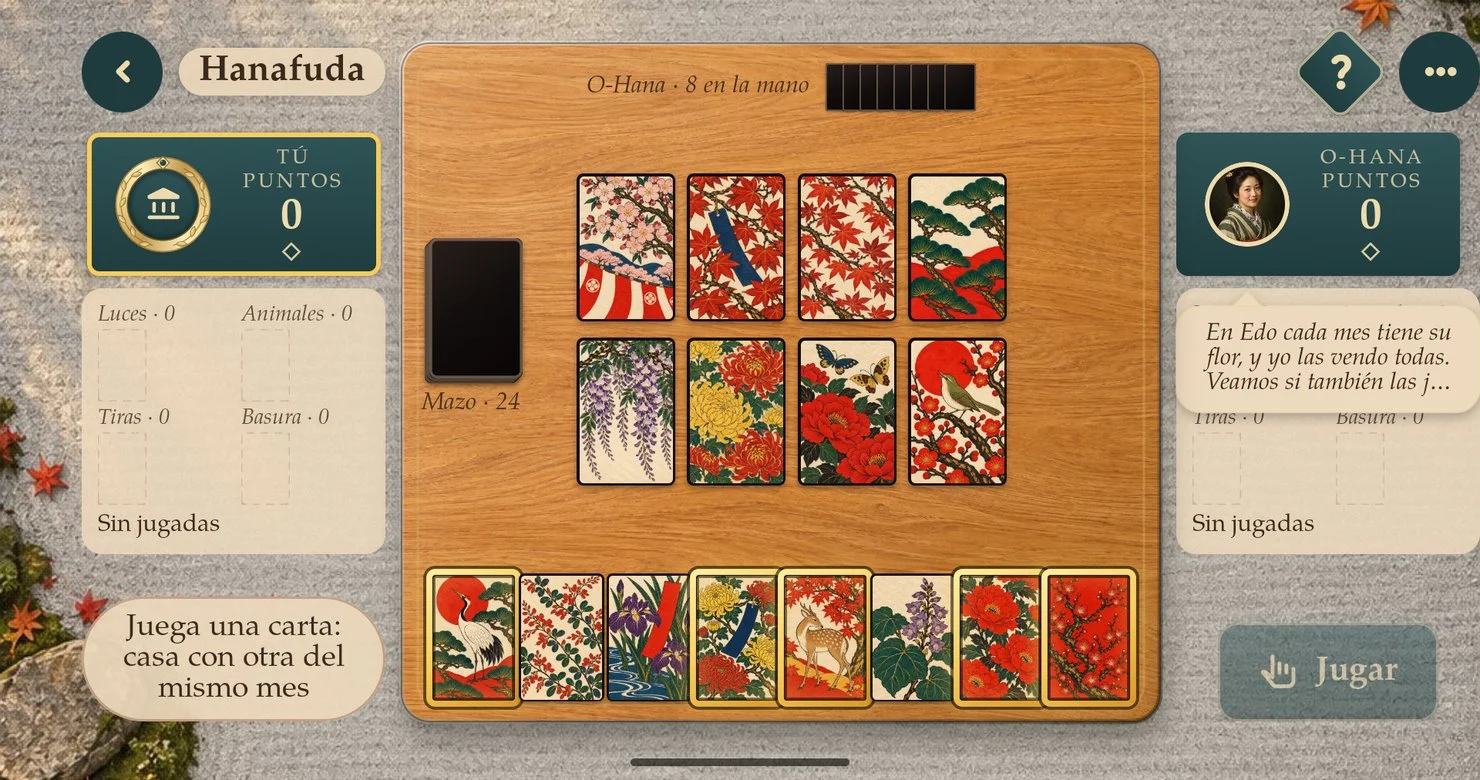
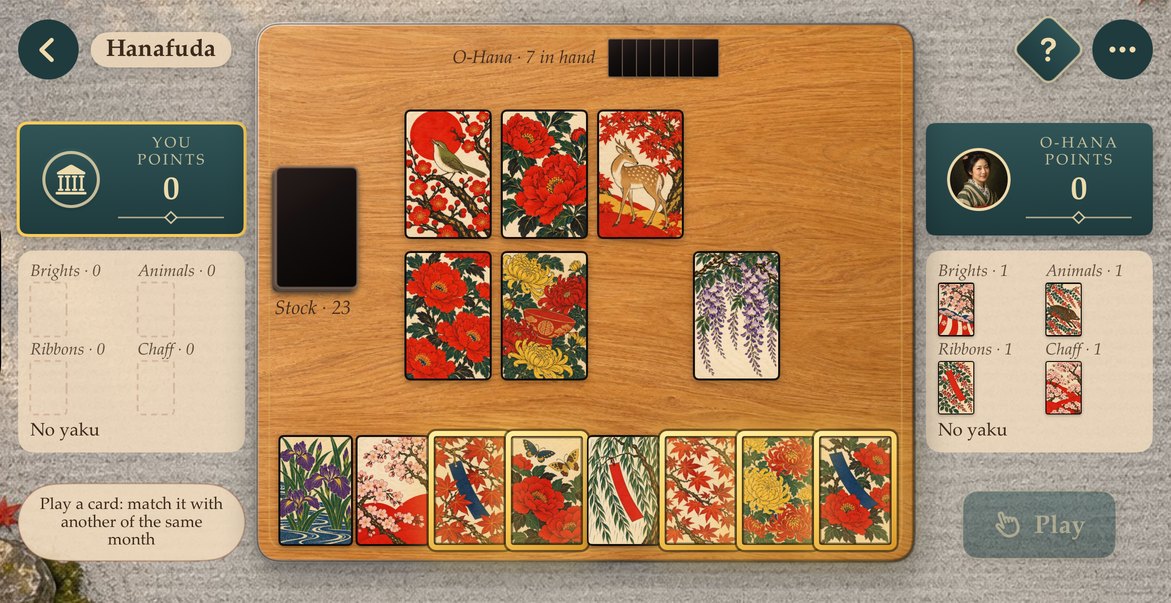
Hanafuda

Hanafuda

The flower cards

Twelve months of four cards: match each card with another from the same month, combine plays like the five lights and decide whether to stand or call «koi-koi».

Rivals: Kenta, the apprentice · O-Hana, the florist · Hokusai, the painter

Their rivals
Kenta, the apprentice · O-Hana, the florist · Hokusai, the painter

Koi-Koi

Spain · 19th c.

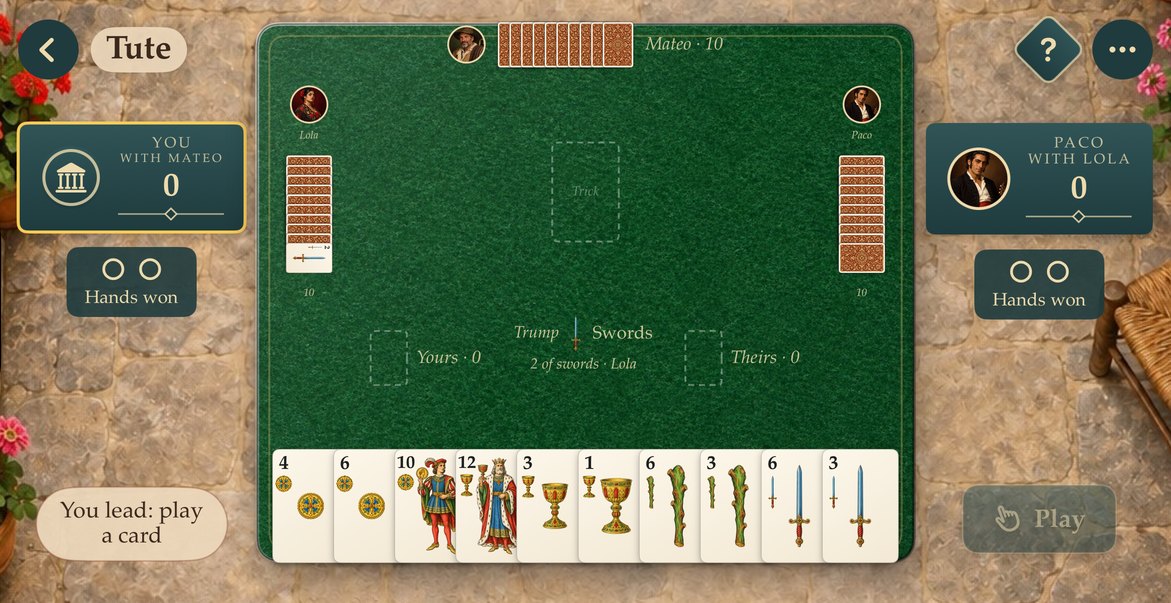
Tute

Tute

The forty, in pairs

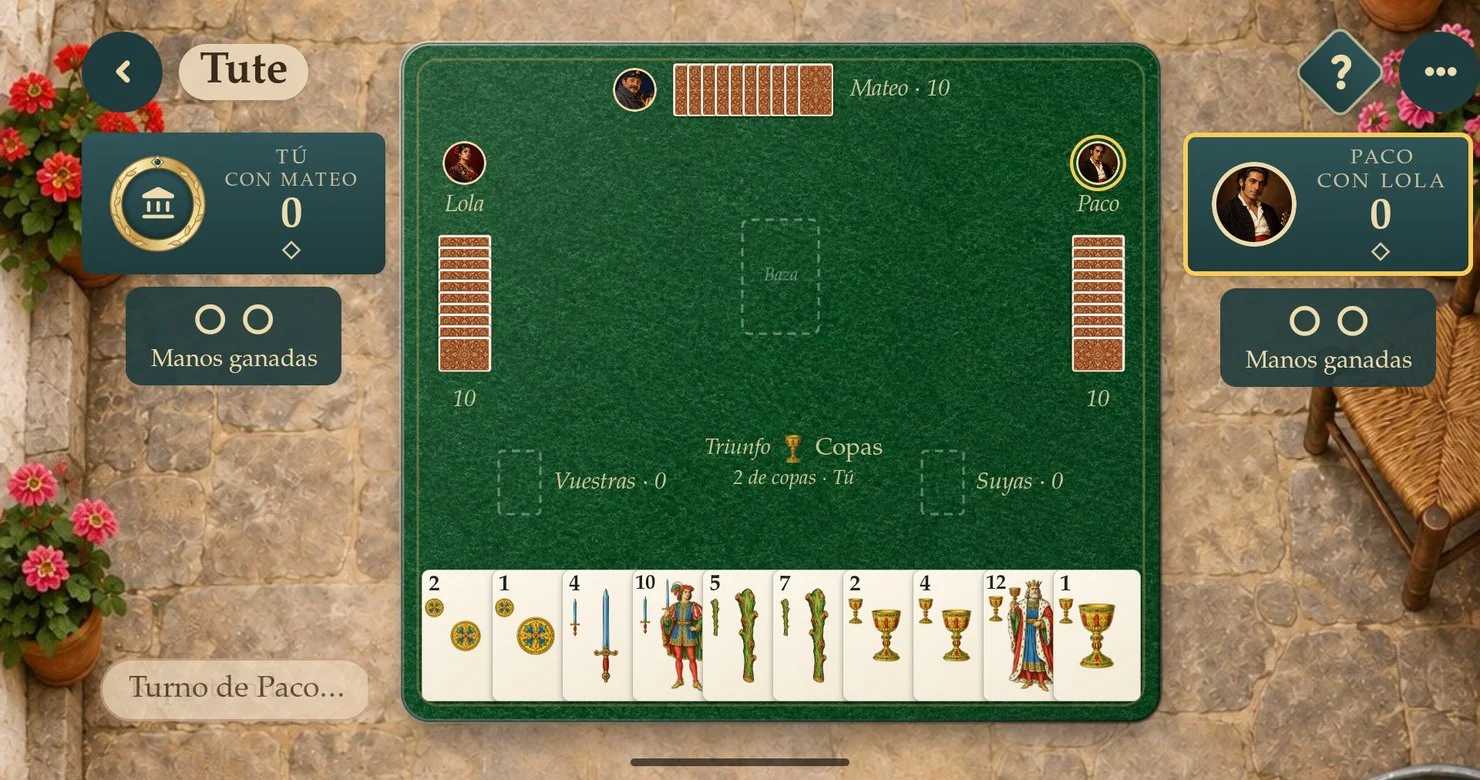
The classic card game of Spain's cafés: follow suit and set up your hand, call the twenty or the forty, and the four kings or knights win the trick. You play paired with Mateo.

Rivals: Pepe, the shoeshiner · Paco, the guitarist · Fermín, from the Estafeta

Their rivals
Pepe, the shoeshiner · Paco, the guitarist · Fermín, from the Estafeta

In pairs

Rivals of their time

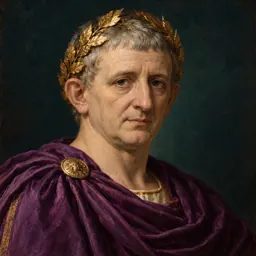
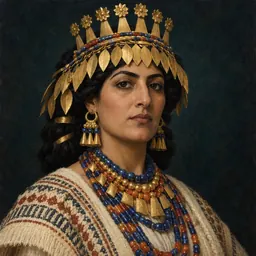
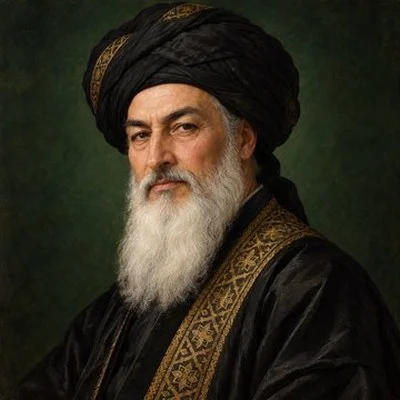
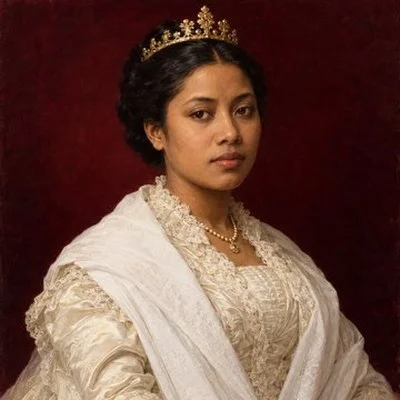
Each game has three characters, one per difficulty: Easy, Normal and Hard. In the Royal Game of Ur, Queen Puabi awaits you; in Patolli, Moctezuma; in Pente Grammai, Aristotle; in Nine Men's Morris, Alfonso X the Wise.

Máximo

Máximo

Latrunculi

Cornelio

Cornelio

Three Men's Morris

Aristóteles

Aristóteles

Pente Grammai

Claudio

Claudio

XII Scripta

Puabi

Puabi

Royal Game of Ur

Alfonso X

Alfonso X

Nine Men's Morris

Harald

Harald

Hnefatafl

Moctezuma

Moctezuma

Patolli

Yaa Asantewaa

Yaa Asantewaa

Oware

Kaʻahumanu

Kaʻahumanu

Kōnane

Don Juan

Don Juan

Conquián

Sir John

Sir John

Cribbage

Achilles

Achilles

Tavli

Tutankhamun

Tutankhamun

Senet

as-Suli

as-Suli

Shatranj

Niu Sengru

Niu Sengru

Xiangqi

Maestro Kansuke

Maestro Kansuke

Shogi

Moshoeshoe

Moshoeshoe

Morabaraba

Ranavalona III

Ranavalona III

Fanorona

Juventino Rosas

Juventino Rosas

Dominoes

Grandpa Saro

Grandpa Saro

Briscola

Hokusai

Hokusai

Hanafuda

Fermín

Fermín

Tute

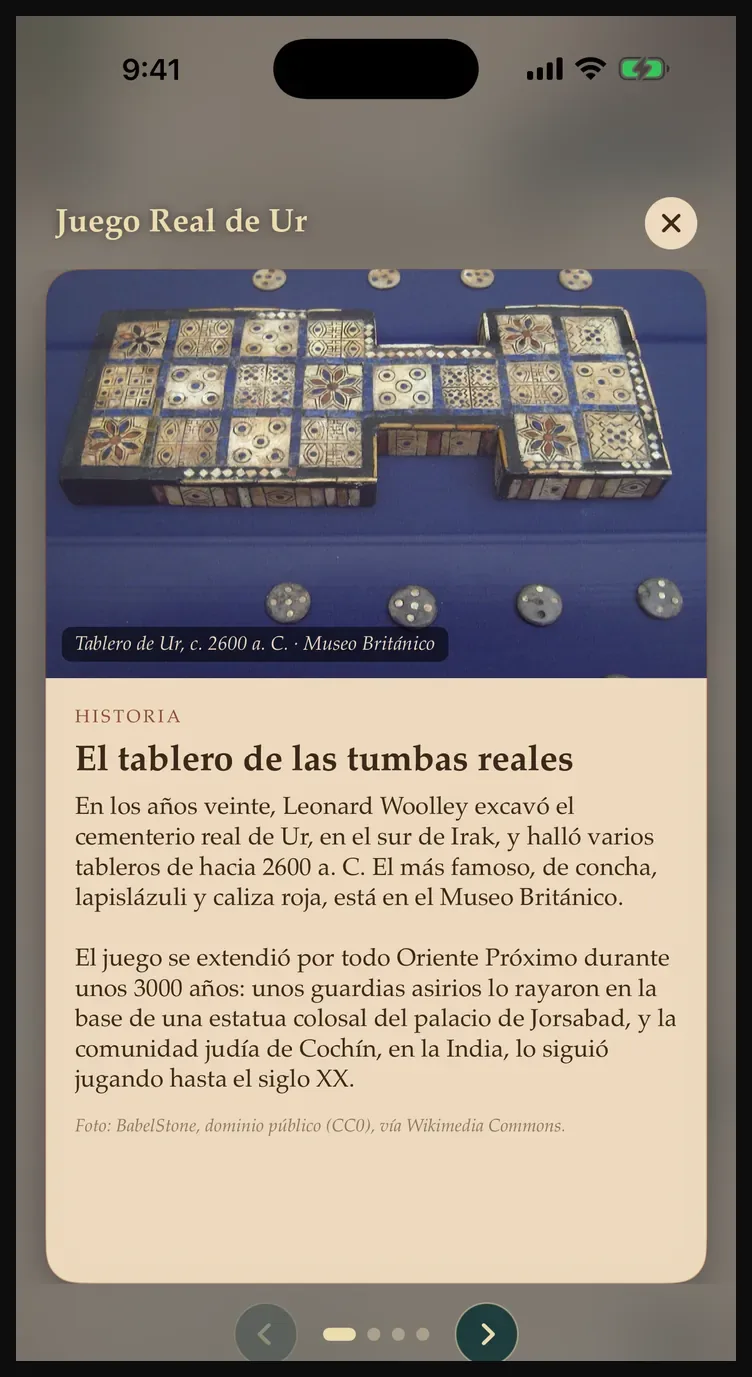
History card for the Royal Game of Ur: "The board of the royal tombs," with a photo of the board from the British Museum
Choose a Tavli variant: Portes, Plakoto, or Fevga

What we know and what we don't

Every game comes with its "i" cards: History, with photos of real boards and pieces from museums; How to play, with an animated explanation; and Rules, which separate what's documented from what's still debated. A guided tutorial teaches you how to play the first time.

Challenges, tournaments, and achievements

Challenges

The weekly challenge and the monthly challenge, with stamps for your yearly collection.

Weekly tournaments

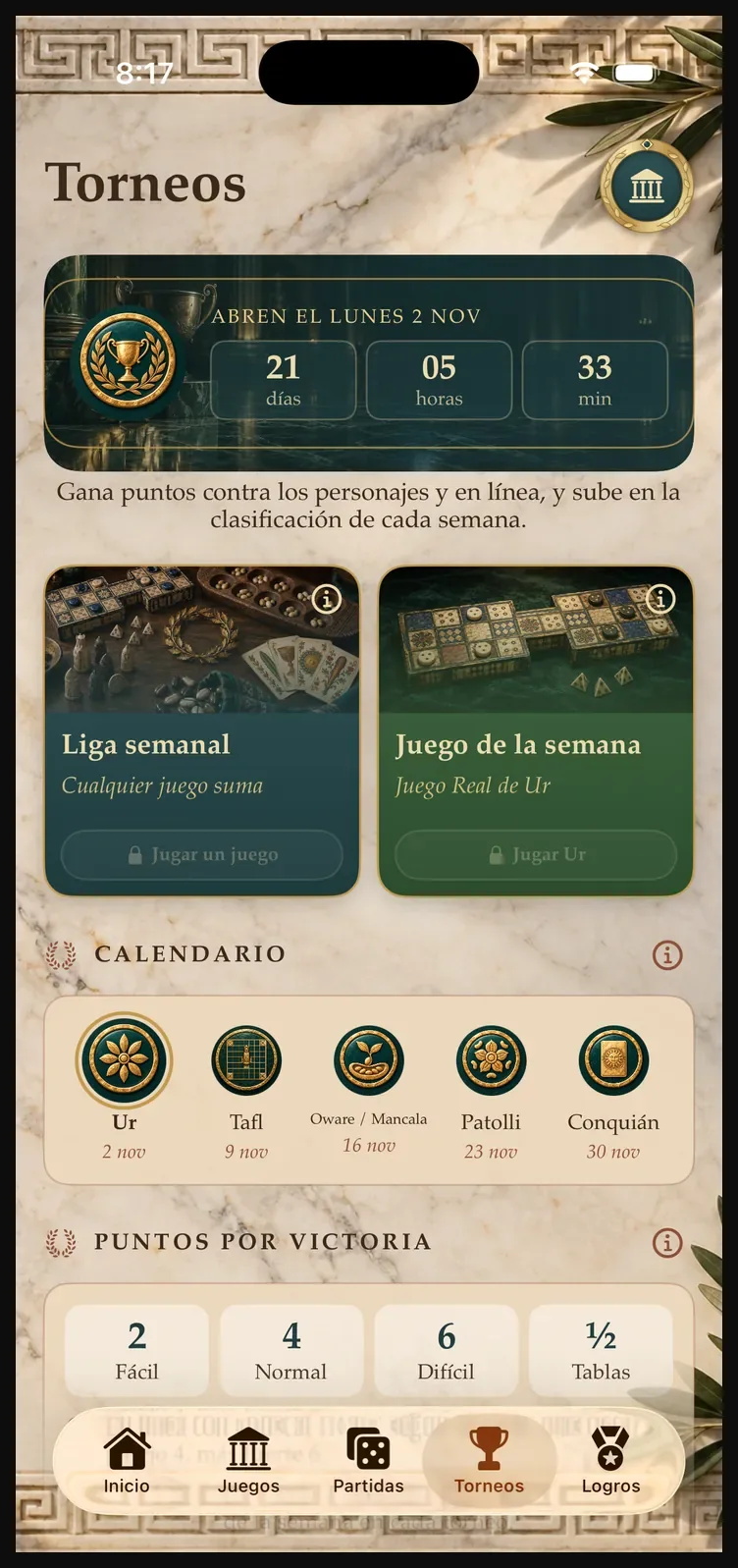
The Weekly League and the Game of the Week, with Game Center and Google Play Games rankings. They start Monday, November 2, 2026.

Achievements

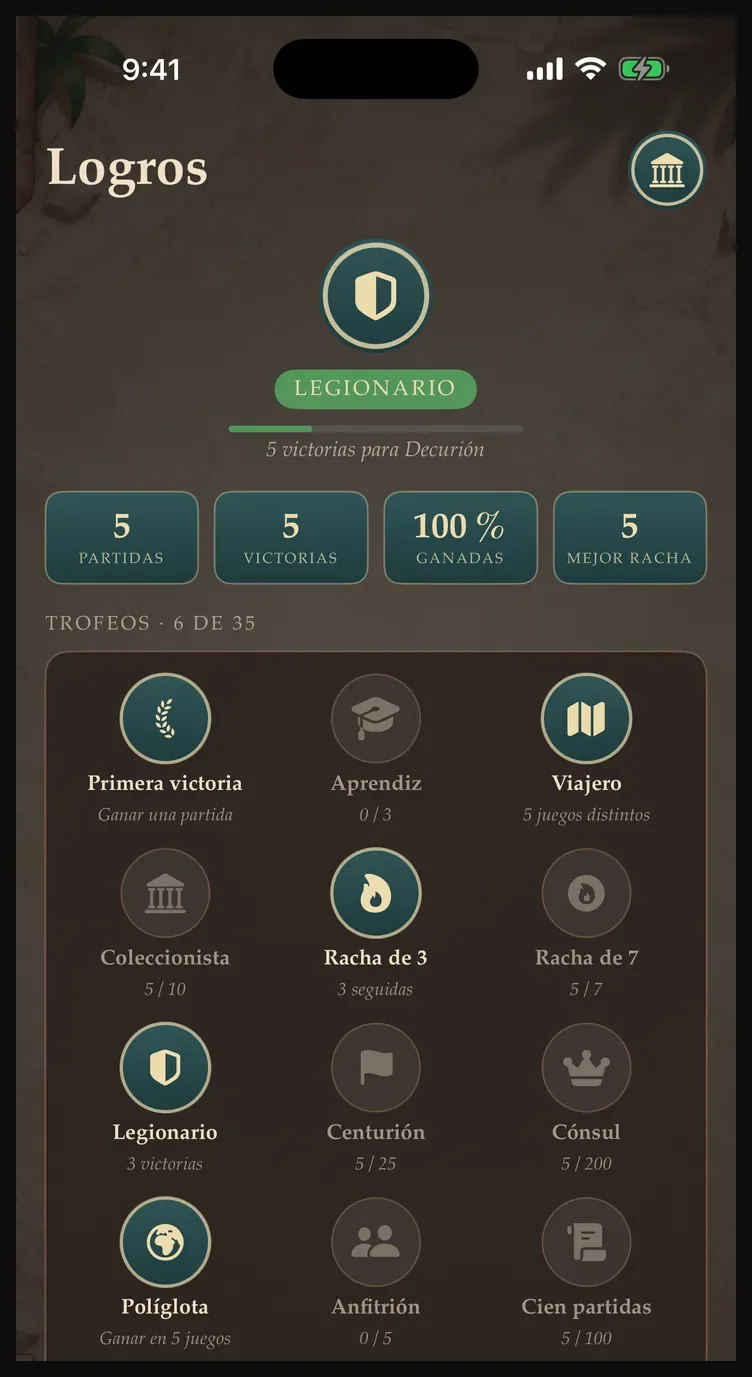
45 achievements on Game Center and Google Play Games for exploring the rooms, playing online, and beating the toughest opponent in each game.

Tournaments screen: countdown, weekly League, Game of the Week and calendar
Achievements screen in dark mode, with trophies and stats

Crafted with care

Boards to choose from

Illustrated or Realistic, in wood, stone, terracotta, straw mat and lapis lazuli mosaic. Mecenas unlock the “Museum” boards.

Real dice

3D dice that roll across the table, the pyramid-shaped dice of Ur and the beans of Patolli.

Music and sound

Original music and sounds for each game.

Dark mode

For playing at night, on every screen.

Seven languages

Spanish, English, French, German, Portuguese, Catalan and Italian.

Your game awaits

Games save themselves: pick up right where you left off.

Also on tablet

The big screen suits the boards, on iPad and Android tablets. Your games and achievements come along with you.

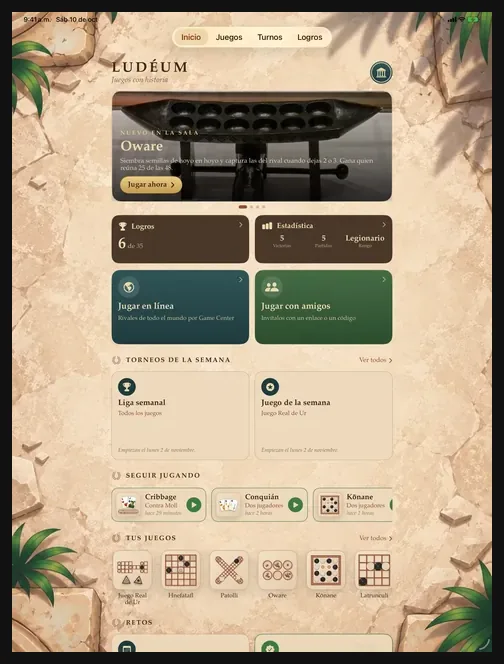
Ludéum on iPad: home screen
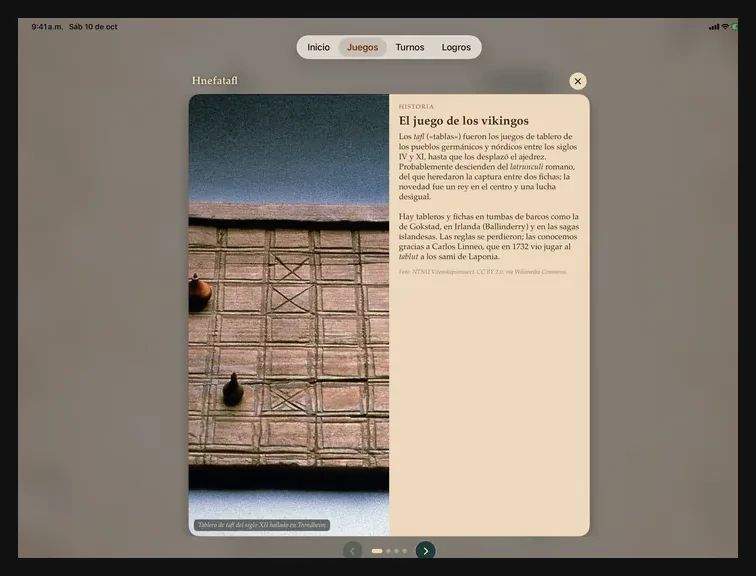
Ludéum on iPad: Hnefatafl History card, "The Viking game"

Mecenas

All of Ludéum is free to play, with no ads. If you want to support the museum, become a Mecenas with a single purchase, no subscription:

  • A gold laurel frame for your emblem, visible to your rival online
  • Unique emblems: museum pieces in gold relief and period portraits
  • Special pieces and dice: lapis lazuli, bronze, ivory, and gold beans with turquoise
  • The "Museum" boards: three for each game
  • One more background for each game and the monthly challenge stamps in gold

On iPhone and iPad it's shared with your family through Family Sharing. Everything new for Mecenas is included at no extra cost.

Coming soon to the museum Coming Soon

The collection keeps growing. These 10 games have already been announced, but can't be played yet: they'll arrive one by one, a new one every month.

Alquerque · Al-Andalus · 10th – 13th c. Checkers · France · 12th c. Puluc · Maya · Guatemala Pachisi · India · 16th c. Komikan · Mapuche · Chile, 1787 Awithlaknannai · Zuni · New Mexico Bao · East Africa · traditional Primera · Spain and Italy · 16th c. Piquet · France · 16th c. Truco · Río de la Plata · 18th c. Komikan · Mapuche · Chile, 1787 Awithlaknannai · Zuni · New Mexico Bao · East Africa · traditional Primero · Spain and Italy · 16th century Piquet · France · 16th century Truco · Río de la Plata · 18th century
Ludéum icon

Ludéum is coming soon to the App Store

For iPhone and iPad. Have Android? Join the trial at groups.google.com/g/ludeum-android. Questions or ideas? Write to us from the support page.

Coming soon to the App Store
Support

Support · Privacy

The app's historical photos come from Wikimedia Commons (public domain or CC BY) and are credited within the app.

© 2026 Carlos Carmona